In landscape architecture projects, corten steel edgings have become the mainstream edging material for lawns, flower beds, and gravel paths thanks to their unique vintage rusted finish and stable structural performance. The core question that concerns many designers and property owners is: How many years can 3mm-thick weathering steel edgings typically last?
Here is an accurate and practical industry-standard reference for service life:
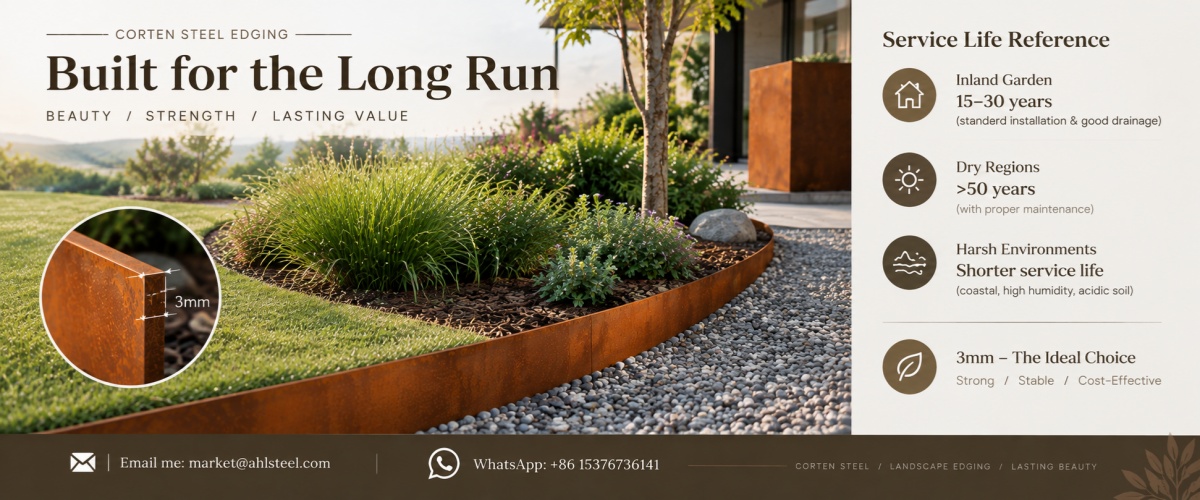
In inland garden settings where installation standards are followed, drainage is unobstructed, and the environment is dry, 3mm garden path edgings can last 15–30 years. In dry regions with proper maintenance and optimal environmental conditions, their service life can even exceed 50 years.
Conversely, harsh environments such as coastal salt fog, high humidity with standing water, and acidic soil will significantly shorten their service life.
3mm is the ideal thickness for landscape edging, striking a perfect balance between structural rigidity, resistance to deformation, and cost. Steel garden edging is not merely a simple material for defining landscape boundaries; it is a structural component that supports long-term landscape stability.
Want the Latest Catalog for Corten Steel Edgings? Contact Us!
Why Does 3mm Corten Edging Last Far Longer Than Ordinary Materials?
1. Protective Patina
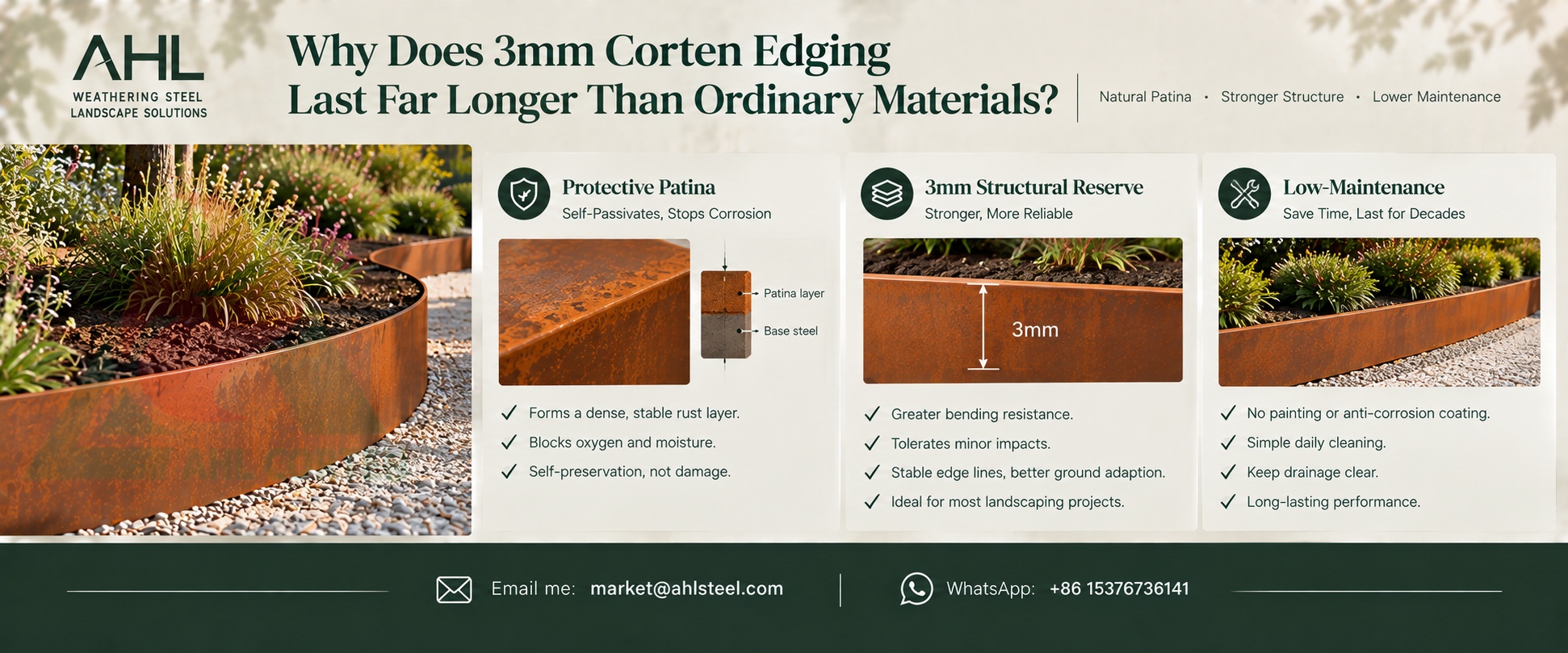
The key difference between weathering steel and ordinary steel lies in its ability to self-passivate and form a protective film. After prolonged outdoor exposure, a dense, stable reddish-brown rust layer (patina) forms on the steel’s surface.
This protective film seals the underlying substrate, blocking further corrosion from oxygen and moisture. Unlike ordinary steel, which rusts indefinitely and peels away in layers, weathering steel enters a stable, slow-aging state.
Simply put: the “rusting” of weathering steel is not damage, but a process of self-preservation.
2. 3mm Provides Structural Reserve
Compared to the 2mm thin lawn border edgings, 3mm corten steel offers greater structural reserve, making it suitable for the vast majority of landscaping applications.
Its comprehensive performance advantages are remarkable: greater resistance to bending, tolerance for minor impacts, more stable edge lines, and better adaptability to the ground.
Everyday lateral soil pressure, bumps from gardening tools, and light foot traffic will not cause the panels to deform, warp, or shift. For ordinary yards and small-to-medium-sized commercial landscapes, 3mm is the most cost-effective and reliable standard thickness.
Only in scenarios involving heavy municipal loads, high foot traffic, or extra-long spans is it necessary to upgrade to 4–6mm thick panels.
3. Low-Maintenance Performance
Edging made of plastic, aluminum alloy, or ordinary sheet metal will age, fade, crack, rust, and deteriorate within a few years, requiring frequent replacement and refurbishment.
3mm garden path edging requires no painting, no anti-corrosion coating, and no frequent repairs.
Daily maintenance is simple: just clean the surface of dust and debris, keep drainage unobstructed, and check the fastening of joints to ensure stable use for decades.
Want the Latest Catalog for Rusted Steel Edgings? Contact Us!
5 Key Factors Affecting the Service Life of 3mm Corten Edging
1. Soil Moisture and Waterlogging (Major Contributing Factors)
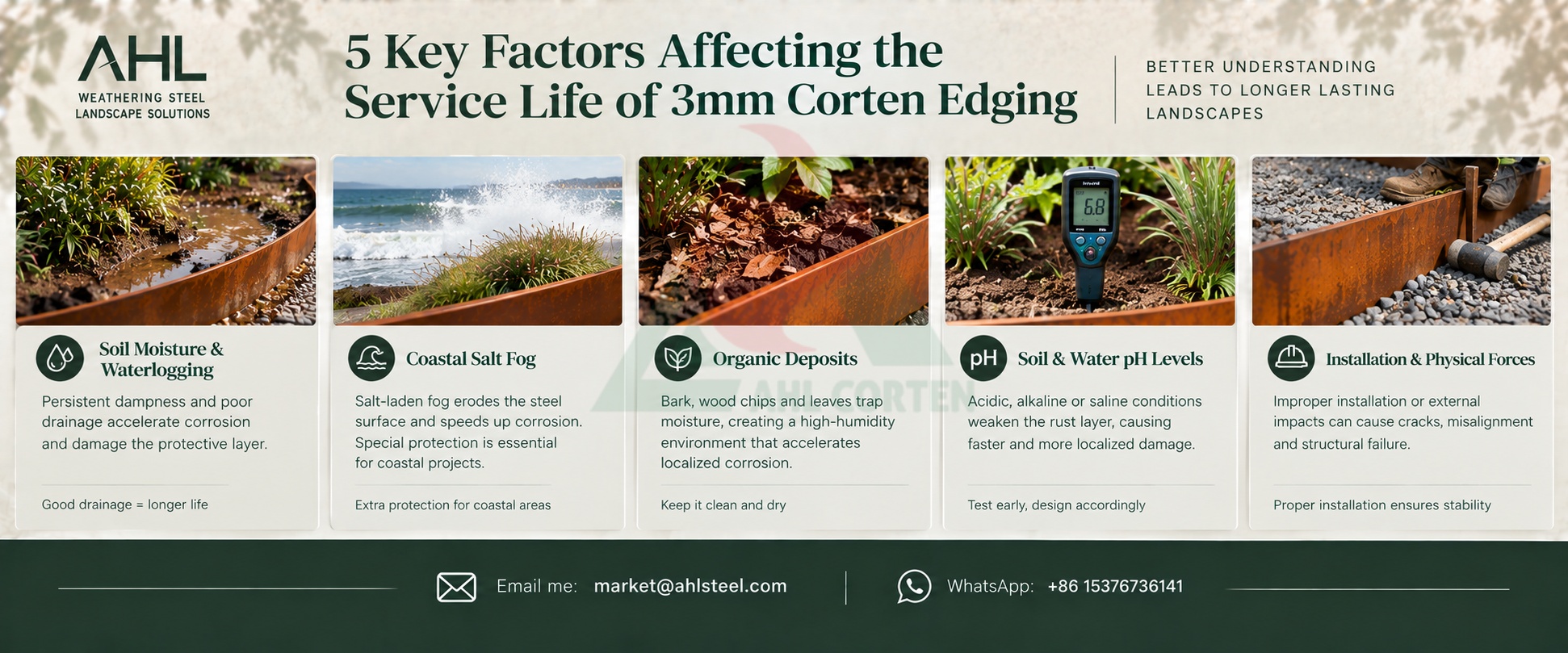
Persistent dampness and waterlogged areas are the primary causes of accelerated aging in corten steel. In areas with clay soil, high groundwater levels, or low-lying terrain prone to water accumulation, the risk of steel corrosion increases significantly.
Prolonged waterlogging can cause localized pitting and uneven rusting of the steel, damaging the stable passivation layer.
In contrast, sites with a smooth alternation between wet and dry conditions and good drainage help the steel form a uniform, dense protective rust layer, significantly extending its service life.
2. Coastal Salt Fog Environments
Salt-laden fog in coastal and near-coastal areas continuously erodes the steel surface, disrupting the stability of the passivation layer.
Therefore, inland service life standards cannot be applied to coastal projects; without special protection, the corrosion rate of 3mm raised garden bed edgings will accelerate significantly.
For coastal landscapes, environmental challenges must be addressed through measures such as using thicker steel sheets, applying anti-corrosion coatings to buried sections, improving drainage, and conducting regular inspections.
3. Surface Organic Deposits
Bark, wood chips, humus, and damp fallen leaves covering flower beds can accumulate in close contact with the steel surface over time, creating a localized microenvironment with high humidity.
This moist organic matter traps moisture and hinders the steel’s natural drying and wetting cycle, leading to accelerated localized corrosion and an unstable rust layer.
Routine maintenance requires the timely removal of thick organic deposits accumulated at the base of the modern garden edgings to ensure the panels remain well-ventilated and dry.
4. Soil and Water pH Levels
Acidic soil, contaminated soil, saline irrigation water, and swimming pool overflow water can all alter the corrosion rate on the steel surface.
Extremely acidic or alkaline environments, as well as high-salinity conditions, weaken the protective rust layer, causing corrosion to shift from uniform aging to rapid localized damage.
For high-standard projects, soil and water conditions must be surveyed in the early stages to develop targeted designs for corrosion protection and drainage optimization.
5. Installation Quality and Physical Forces
Even the best materials cannot withstand improper installation or damage from heavy external forces.
Crooked installation, sparse anchoring, or incompatible fastening materials can lead to uneven stress distribution in the panels, causing cracks at joints and misalignment of seams.
Vehicle crashes, collisions with heavy equipment, or compression from large rocks can directly cause panel deformation and structural failure, significantly shortening the service life.
Want the Latest Catalog for Lawn Border Edging? Contact Us!
The Soil-Air Interface: The Most Vulnerable Zone
1. Why is this Area Most Prone to Damage?
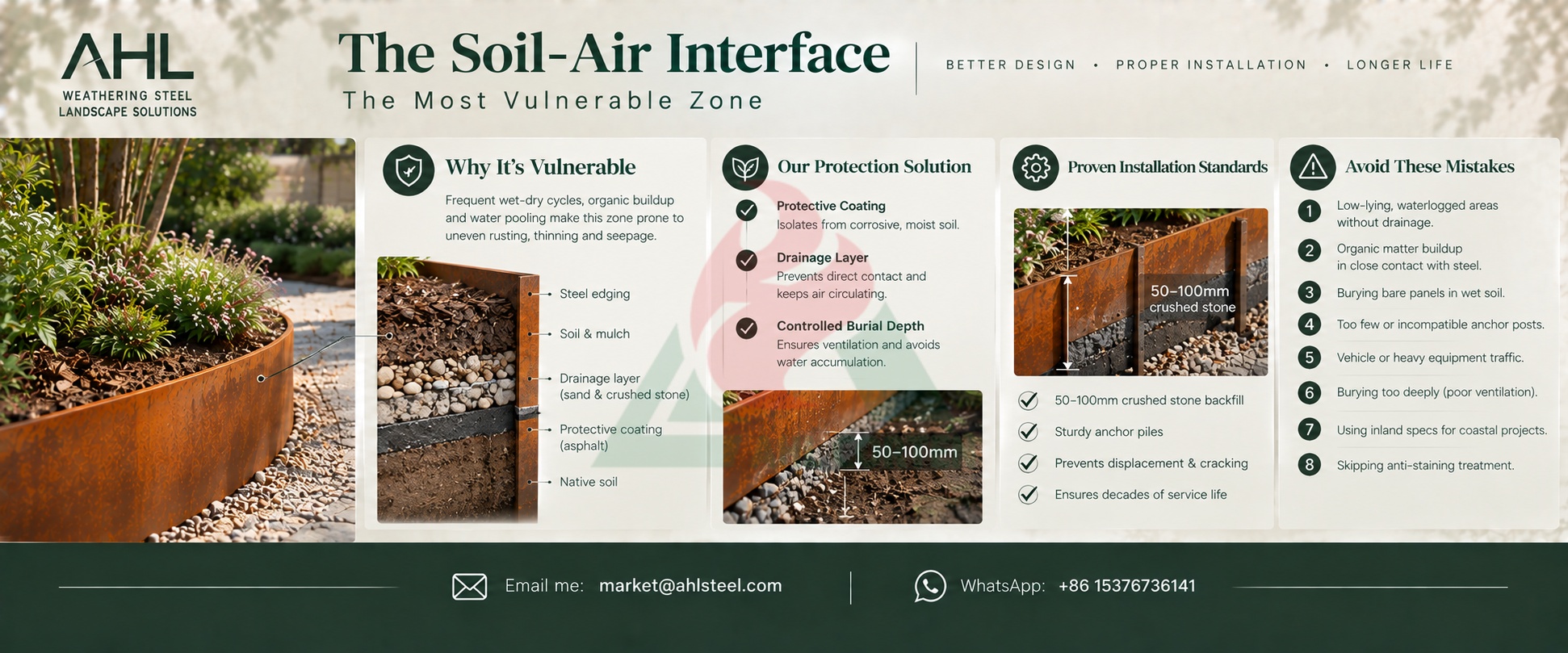
The point where the steel meets the soil, air, and moisture is the area where wet-dry cycles occur most frequently, organic matter accumulates most easily, and water tends to pool.
This area is highly susceptible to uneven rusting, localized thinning of the steel plate, and water seepage at joints, making it the weakest link in the entire garden path edging.
2. Professional Protection and Drainage Optimization Solutions
For the steel-soil interface, industry-proven solutions to extend service life include multiple layers of protection: applying an asphalt protective coating to the buried section to isolate it from corrosive, moist soil.
Laying a drainage layer of coarse sand and crushed stone on the back of the steel plate prevents direct contact with wet soil and ensures air circulation.
Strictly controlling the burial depth prevents excessive burial, which can lead to insufficient ventilation, water accumulation, and rot.
3. Long-Term Installation Standards
A 50–100 mm layer of crushed stone is reserved behind the edge strips to create an unobstructed drainage space.
Combined with sturdy anchor piles, this prevents panel displacement and joint cracking caused by soil pressure, ensuring a service life of several decades through meticulous attention to detail.
Installation Practices That Extend Service Life
In many projects, steel garden edgings begin to warp, rust, or break within just a few years. This is not due to material defects, but rather to common construction mistakes. The following errors must be strictly avoided:
- Constructing directly in low-lying, waterlogged areas with heavy clay soil and high groundwater levels without implementing any drainage improvements.
- Allowing tree bark, fallen leaves, and humus to accumulate in close contact with the steel surface over long periods, creating a persistently damp and corrosive environment.
- Neglecting protection at the steel-soil interface and burying bare panels directly into wet soil, which accelerates localized corrosion.
- Using an insufficient number of anchor posts or posts made of incompatible materials, leading to displacement, gaps, and galvanic corrosion.
- Allowing vehicles and heavy equipment to directly roll over the edge strips, causing permanent deformation.
- Burying the panels too deeply, preventing ventilation on the backside and hindering the normal formation of a passivation layer.
- Applying standard inland installation specifications directly to coastal projects without using thicker panels or corrosion protection.
- Failing to apply anti-staining treatment during the initial phase, resulting in rust water staining light-colored paving and compromising the aesthetic effect.
Want the Latest Catalog for Lawn Border Edging? Contact Us!
How 3mm Compares with Other Thicknesses?
| Thickness |
Typical Application |
Strength and Lifespan Consideration |
| 1.5–2mm |
Light residential borders and decorative beds. |
Lightweight but more vulnerable to bending. |
| 3mm |
Residential, commercial, and high-traffic landscaping. |
Balanced durability, stiffness, and cost. |
| 4mm |
Heavy-duty gardens, slopes, and large landscape projects. |
Greater impact resistance and structural reserve. |
| 5–6mm |
Public spaces, driveways, large stone areas, and engineered projects. |
Designed for demanding conditions and heavy loads. |
For Which Projects is 3mm Steel Edging Suitable?
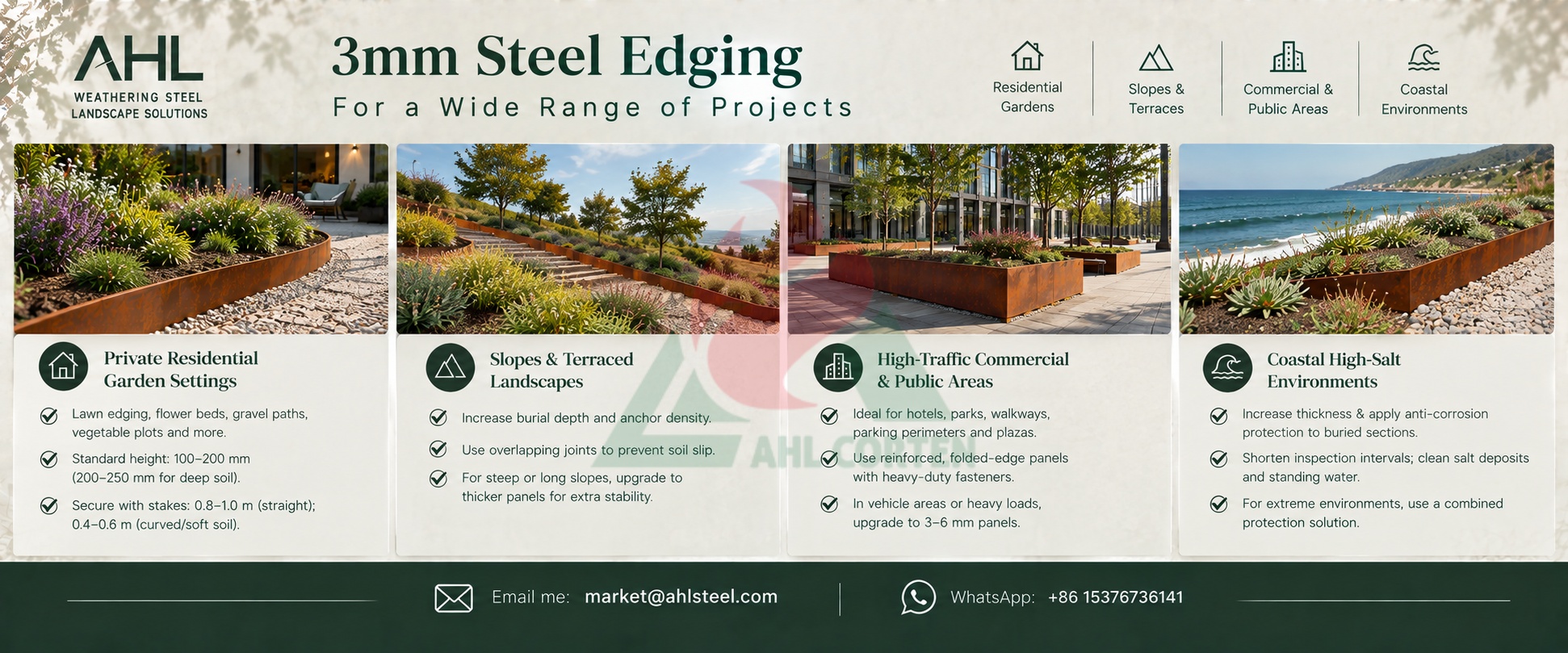
1. Private Residential Garden Settings
The 3mm option is the optimal choice for garden landscaping, suitable for lawn edging, flower bed borders, gravel paths, vegetable garden plots, and minimalist garden designs.
Standard heights range from 100–200 mm; for planters with deep soil coverage, the 200–250 mm extended-height version is recommended.
For straight sections, secure with stakes every 0.8–1 meter; for curved sections or soft soil, increase the spacing to 0.4–0.6 meters to ensure neat and stable lines.
2. Slopes and Terraced Landscapes
Soil on slopes is prone to slippage, and rainwater erosion is intense, subjecting modern garden edgings to greater lateral pressure.
During installation, increase the burial depth, increase the density of anchor stakes, and use overlapping joints to prevent soil displacement from pulling on the panels.
For projects involving steep or long slopes, upgrade directly to thicker panels to enhance structural stability.
3. High-Traffic Commercial and Public Areas
Suitable for high-traffic environments such as hotel grounds, municipal parks, walkways, parking lot perimeters, and plaza landscaping.
We recommend using reinforced, folded-edge panels paired with heavy-duty fasteners to enhance resistance to impact and crush.
In areas adjacent to vehicle traffic or subject to heavy loads, upgrade to 3–6 mm thick panels to prevent deformation and damage.
4. Projects in Coastal High-Salt Environments
For coastal areas, adjust the design based on salt fog concentration: moderately increase panel thickness and apply specialized anti-corrosion protection to buried sections.
Shorten inspection intervals and regularly clean surface salt deposits and standing water. In extreme marine environments, implement a combined protective solution to ensure service life.
Want the Latest Catalog for Steel Garden Edging? Contact Us!
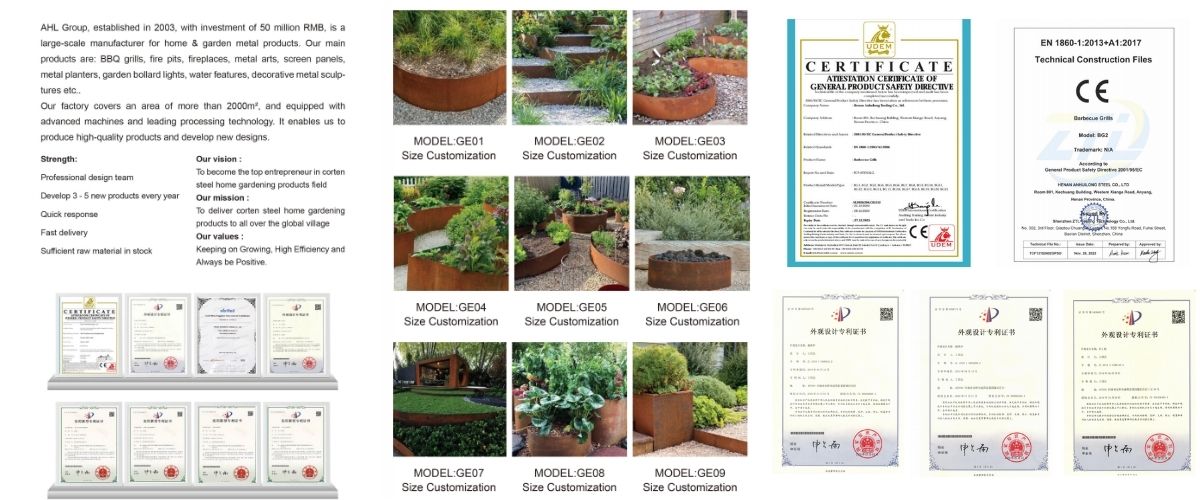
Why Choose AHL 3mm Corten Steel Edging?
1. High-Quality Materials and Standardized Production
AHL 3mm corten edgings are made from weathering steel base material that meets national standards, featuring uniform thickness, smooth edges, and precise welding.
The sheet structure is stable, with no thin spots or deformation, ensuring decades of outdoor service life right from the start.
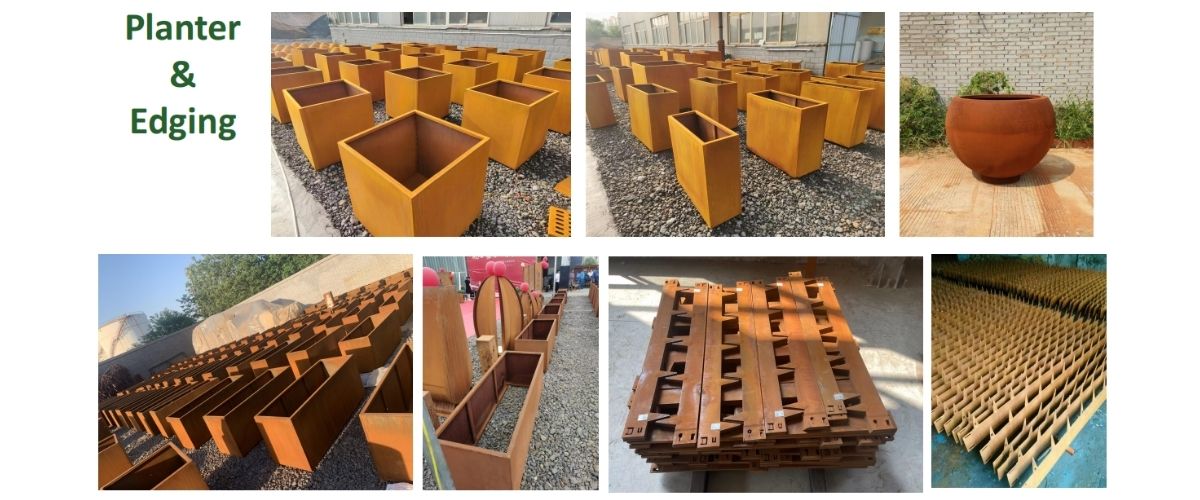
2. Comprehensive Customization
We support customization of height, length, straight or curved profiles, specialized corner fittings, and reinforced folded-edge structures.
We can pre-drill drainage and mounting holes to accommodate various site-specific drainage and mounting requirements, eliminating the limitations of one-size-fits-all solutions.
3. Scenario-Specific Engineering Solutions
We provide tailored thicknesses, mounting methods, and corrosion protection solutions for different scenarios, including courtyards, commercial spaces, municipal projects, sloped terrain, and coastal areas.
We reject one-size-fits-all products and instead customize solutions entirely based on project conditions to precisely meet expected service life requirements.
4. End-to-End One-Stop Technical Services
We provide preliminary product selection advice, construction detail drawings, sample approval, custom manufacturing, installation guidance, and after-sales technical support—ensuring comprehensive support throughout the entire project implementation process.
 Want the Latest Catalog for AHL Steel Garden Edging? Contact Us!
3mm Corten Edging: Cost and Long-Term Value
1. Initial Cost Versus Replacement Cost
Although the initial investment in 3mm weathering steel edging is higher than that of plastic or standard aluminum, there are no subsequent costs for replacement, renovation, or repair.
Installed once, it provides decades of reliable service, completely eliminating the waste of labor and materials associated with repeated repairs.
2. Stable Structure and Aesthetic Appeal
Resistant to UV aging, freeze-thaw cycles, and soil compression, it will not fade, warp, crack, or collapse.
It consistently maintains crisp landscape boundary lines and preserves an exquisite landscape texture year-round.
3. High-End Architectural Aesthetics
Corten steel’s unique warm brown rust color perfectly complements various landscape materials such as greenery, gravel, natural stone, raw wood, and exposed concrete.
It suits a wide range of design styles—including minimalist, industrial, rustic, and modern luxury—significantly enhancing a project’s sophistication and quality.
Frequently Asked Questions (FAQ): Corten Steel Edging
Q1: How Long Will 3mm Corten Edging Last In Different Environments?
A: In dry, well-drained inland courtyards, it lasts 15–30 years; in optimal conditions, it can exceed 50 years. In high-humidity, waterlogged, or coastal salt-fog environments, its lifespan will be significantly shortened, requiring upgraded protective measures.
Q2: Is It Worth Upgrading From 2mm to 3mm Rusted Steel Edgings?
A: It is worth upgrading in the vast majority of scenarios. The 3mm strips offer greater rigidity, stability, and resistance to deformation, making them suitable for a wider range of applications and providing better value for money over the entire lifecycle.
Q3: Will Corten Steel Continue to Rust Indefinitely?
A: Initially, it will naturally weather and change color. Later, a stable passivation layer will form, significantly slowing the corrosion rate and entering a controllable, stable aging state.
Q4: Can Steel Edging Strips Be Completely Buried In The Ground?
A: Yes, but the buried sections are vulnerable areas. Proper drainage, isolation, and corrosion protection must be implemented to prevent localized accelerated corrosion.
Q5: How Can Rust Water From Corten Steel Be Prevented From Staining the Paved Surface?
A: In the early stages, pre-rusting treatment, the installation of a gravel buffer zone, and the provision of drainage channels can help prevent rust water from staining light-colored stone and concrete.
Q6: Do 3mm Corten Edgings Require Frequent Maintenance?
A: No frequent maintenance is required; simply clean away accumulated debris periodically, keep drainage unobstructed, and inspect the fastening joints.
Q7: Are 3mm Corten Edgings Suitable for Driveway Edging?
A: They can be used along driveway edges, but must be secured more frequently to prevent direct vehicle crush; for heavy-duty driveways, we recommend upgrading to the 4–6mm thickened version.
Q8: What is the Optimal Height for 3mm Lawn Edgings?
A: For standard yards, 100–200mm; for deep-soil flower beds and sloped landscapes, 200–300mm. Adjust according to soil depth and landscape requirements.
Are You Ready to Choose the Perfect Corten Edging for Your Outdoor Space?
3mm rusted steel edging is the gold standard for landscape edging. In standard gardens with proper installation and unobstructed drainage, it can last reliably for 15–30 years, and in dry, high-quality environments, it can even last over 50 years.
Its exceptionally long lifespan stems from the steel’s self-passivating protective properties, ample 3mm structural redundancy, and extremely low maintenance requirements, while also combining aesthetic appeal with practicality.
Environmental conditions, construction details, and protective design are the key factors determining its ultimate service life—far more important than mere thickness specifications.
If you’re planning a garden, commercial landscape, or municipal project and are unsure about custom curved edging specifications, installation techniques, or protective solutions, please contact the AHL team. We provide one-on-one customized project solutions, professional selection guidance, and comprehensive technical support throughout the implementation process, ensuring your weathering steel landscape is installed once and lasts a lifetime.
Get A Free Catalog and Price Quote!