When implementing corten steel screen projects, many property owners and designers have one key question: After installation, will the weathering steel screens continue to rust—and will they rust more as they age?
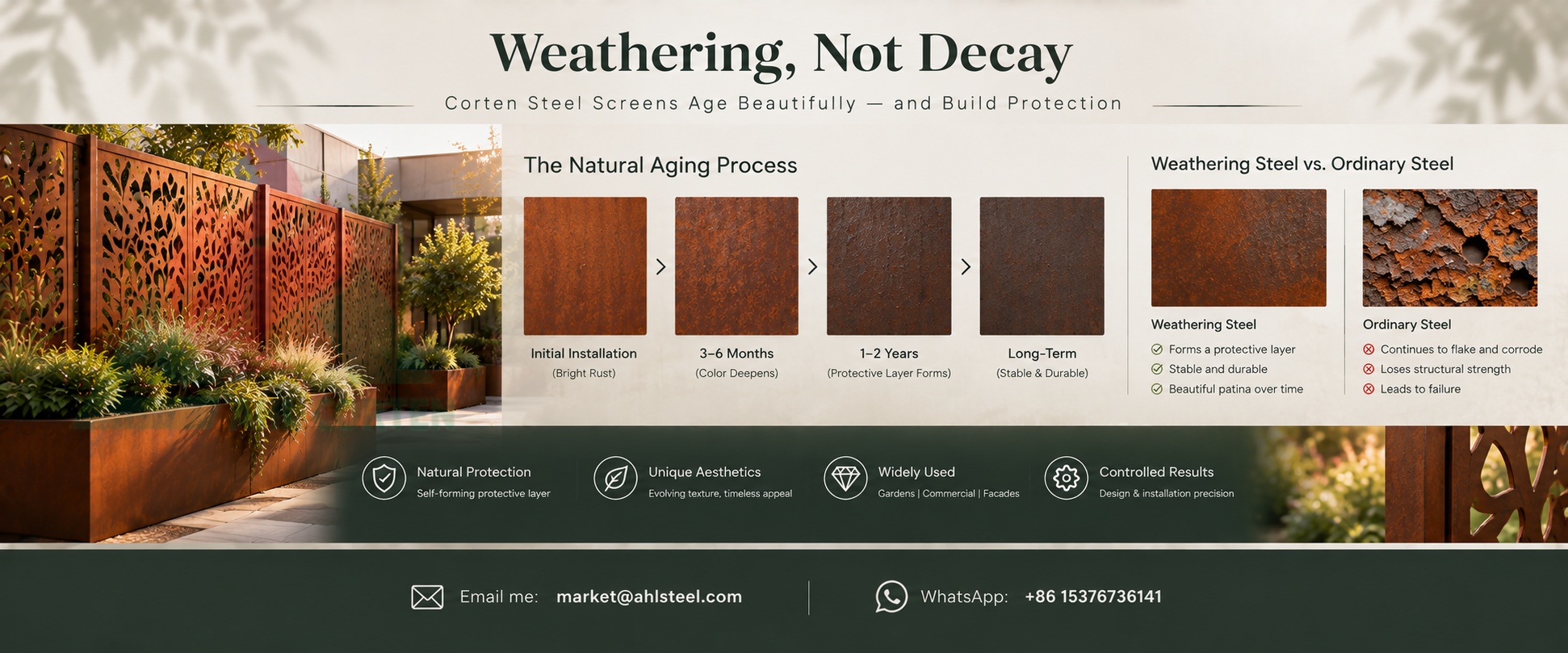
This article provides a clear answer: Laser-cut corten privacy screens will indeed continue to rust and undergo natural discoloration and aging after installation. However, this rusting is entirely different from the decay and corrosion of ordinary steel; it is a controlled, protective form of natural aging.
Rust on ordinary steel continues to flake off and corrode layer by layer, ultimately leading to structural failure. In contrast, the rusting of weathering steel is a self-protective mechanism that gradually forms a dense protective layer, sealing the steel substrate.
This unique “evolving texture” is also the core reason why weathering steel garden screens have become a popular material for high-end gardens, commercial landscapes, and building facades. Through proper design and installation, we can precisely control the pace of its color change and the final aesthetic result.
Want the Latest Catalog for Corten Steel Screens? Contact Us!
4 Stages of Corten Steel Screen Aging
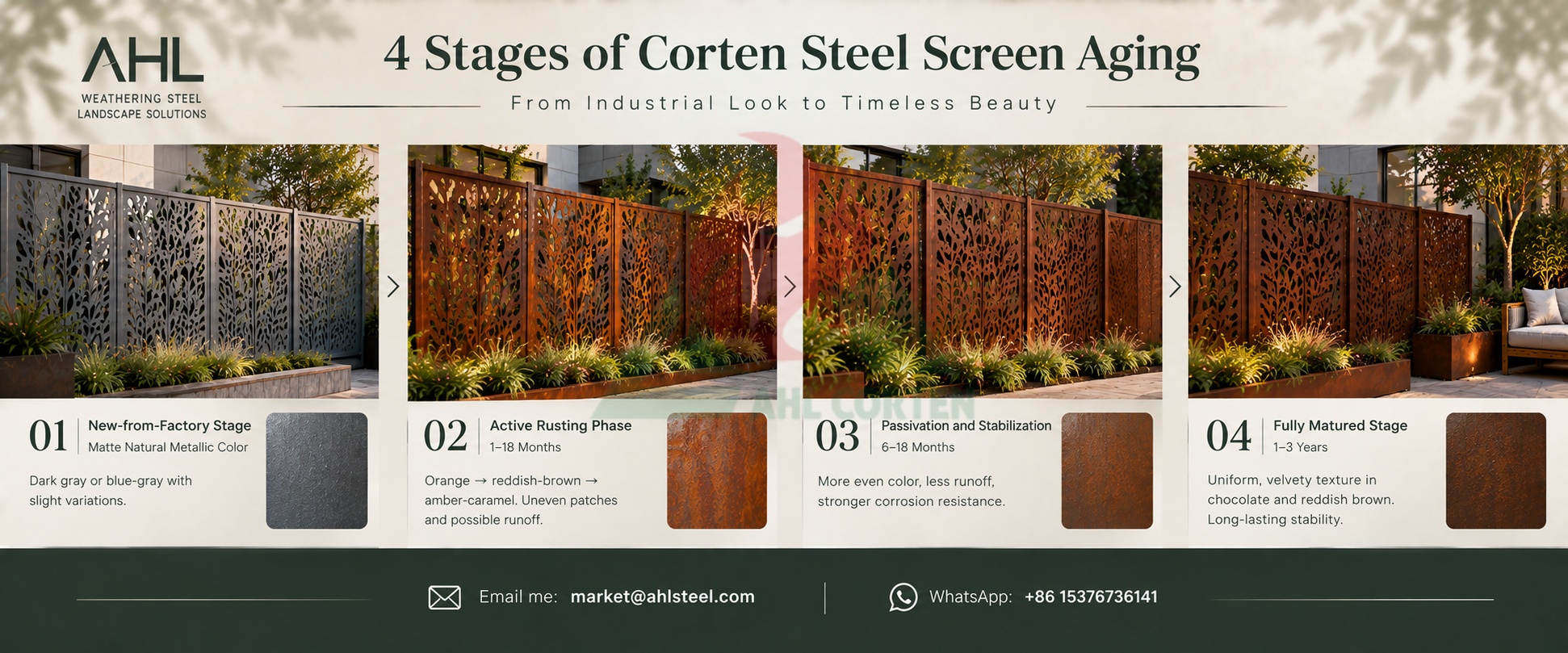
The discoloration, rusting, and stabilization of weathering steel screens follow a clear cyclical pattern. It takes 1–3 years for the structure to fully mature and stabilize, and the entire process is divided into four stages, each with distinct appearances and characteristics.
Fresh-from-the-Factory Stage: Matte Natural Metallic Color
A metal garden screens that have just been installed do not yet exhibit a vintage rusted appearance. At this stage, the panels display the natural industrial metallic colors of dark gray or blue-gray, with slight variations in surface tone.
These color variations are normal for a product fresh from the factory; they occur naturally during production, transportation, and storage and do not constitute a product quality issue. As the screen is exposed to the outdoor environment, the color will gradually become more uniform.
Active Rusting Phase (1–18 months): Most Noticeable Color Changes
This is the most active phase of change for weathering steel screens. Under the influence of rain, humidity, and wet-dry cycles, the steel oxidizes rapidly, and the color gradually evolves: bright orange → reddish-brown → amber-caramel.
Two typical characteristics appear during this stage: uneven color patches on the surface and rust runoff caused by rainwater. These are normal physical and chemical reactions and do not indicate material damage.
Due to regional climate differences, the active rusting period varies slightly; color changes occur faster in rainy and humid areas, while the aging process is relatively slower in dry regions.
Passivation and Stabilization Stage (6–18 Months): The Rust Layer Gradually Solidifies
As oxidation continues, the loose surface rust on the screen gradually compacts and densifies, forming a preliminary protective oxide layer.
The key changes during this stage are: the overall color tone gradually evens out, rust runoff is significantly reduced, and the steel’s corrosion resistance continues to improve.
At this point, the screen has developed basic self-protective capabilities, and large-scale mottling or color loss no longer occurs.
Fully Matured Stage (1–3 years): Development of a Vintage, Stable Texture
One to three years after installation, the garden screen completes its entire aging process, ultimately forming a uniform, fine-grained, velvety-textured passivation layer in shades of dark chocolate brown and reddish brown.
The mature rust layer adheres tightly to the steel substrate, completely isolating it from oxygen and moisture. Subsequently, only subtle variations in hue will occur due to seasonal humidity, while structural performance remains permanently stable.
Want the Latest Catalog for Rusted Steel Screens? Contact Us!
Natural Aging vs. Destructive Rust: How to Distinguish Between Healthy and Unhealthy Rust?
Not all rust is a normal phenomenon. Learning to distinguish between protective natural aging and destructive rust is key to maintaining weathering steel screens.
Normal Protective Aging
The color transitions evenly, with no peeling, flaking, or pitting. The oxide layer becomes denser with use, the steel thickness remains unchanged, and the structure remains stable over the long term.
No painting or frequent maintenance is required; the steel relies on its own alloy composition to form a “self-healing” protective film, allowing minor scratches to heal naturally through oxidation.
Abnormal Destructive Corrosion
Caused by standing water, poor ventilation, salt fog pollution, and sediment buildup, this leads to issues such as peeling or flaking of the rust layer, localized pitting, and thinning of the steel plates.
This type of corrosion continuously erodes the steel substrate; if left untreated for an extended period, it will compromise the structural stability of the screen and must be avoided during construction and maintenance.
Protective Principle of the Passivation Layer in Weathering Steel
Weathering steel is alloyed with special elements such as copper, chromium, and nickel. The passivation layer formed after oxidation is permeable to air but impermeable to water. It allows for natural aging while blocking deep corrosion—a core advantage that ordinary carbon steel lacks.
5 Key Factors Affecting the Rusting Rate of Screens
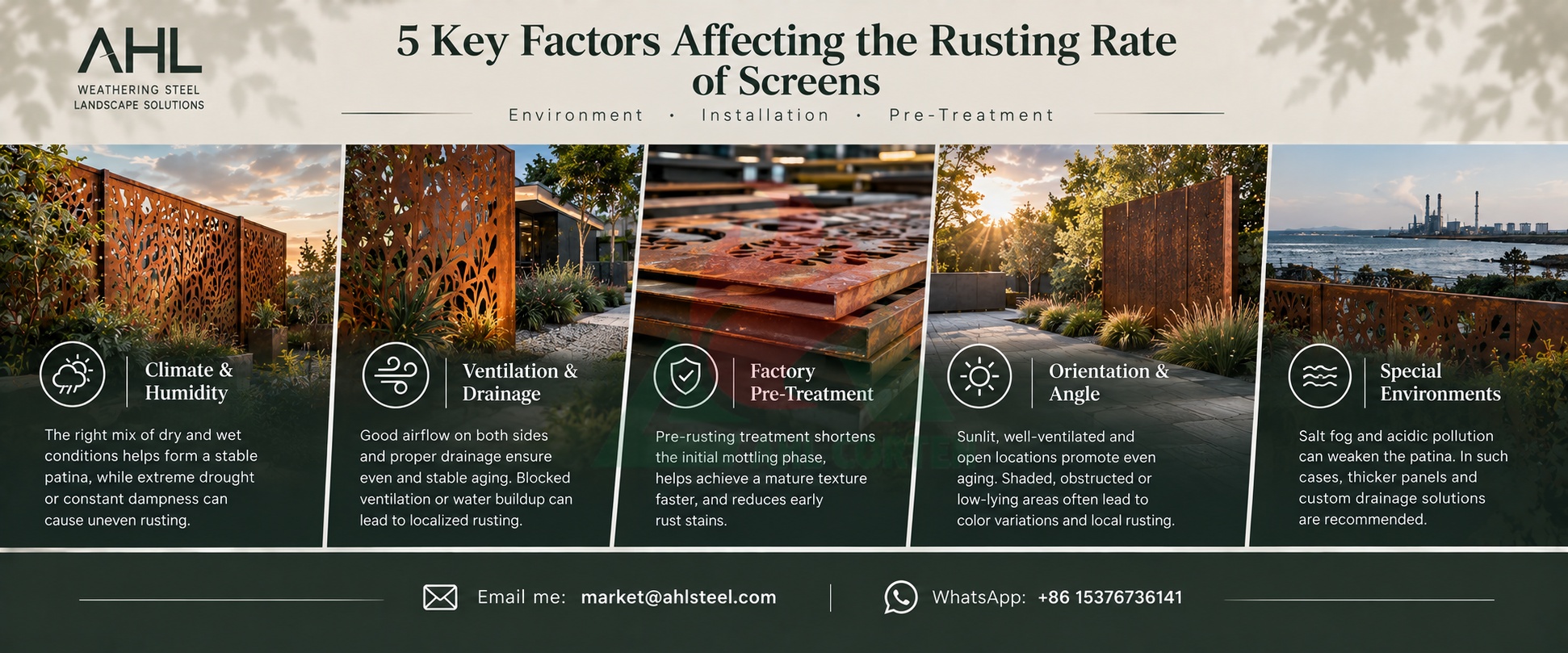
The aging rate of weathering steel is not fixed; it is directly influenced by the environment, installation method, and pretreatment process.
Climate and Humidity Conditions
A regular cycle of dry and wet conditions accelerates the formation of a high-quality passivation layer, causing the screen to change color quickly and evenly.
Prolonged periods of extreme drought or persistently waterlogged, damp conditions can hinder normal aging, resulting in uneven coloration and abnormal rusting.
Ventilation and Drainage Conditions
Ventilation is key to maintaining weathering steel. Screens with unobstructed ventilation on both sides and proper drainage without standing water will age most uniformly and stably.
Accumulation of fallen leaves, soil, or humus at the base, or installation flush against a wall without ventilation gaps, can create localized dampness and trigger abnormal rusting.
Factory Pre-Treatment Process
Screens that have undergone a factory pre-rusting treatment can significantly shorten the initial mottling phase, quickly developing a mature, vintage texture after installation while minimizing rust stains during the early stages.
Installation Orientation and Angle
Screens installed in sunny, well-ventilated, and open locations age evenly and attractively. Screens placed in shaded, obstructed, or low-lying, waterlogged areas are prone to color variations and localized rust resurgence.
Risks in Special Environments
Salt fog near the coast and acidic pollution from heavy industry can compromise the stability of the passivation layer. In such scenarios, thicker panels and custom drainage structures are required to accommodate the specific conditions.
Want the Latest Catalog for Laser-Cut Corten Privacy Screen? Contact Us!
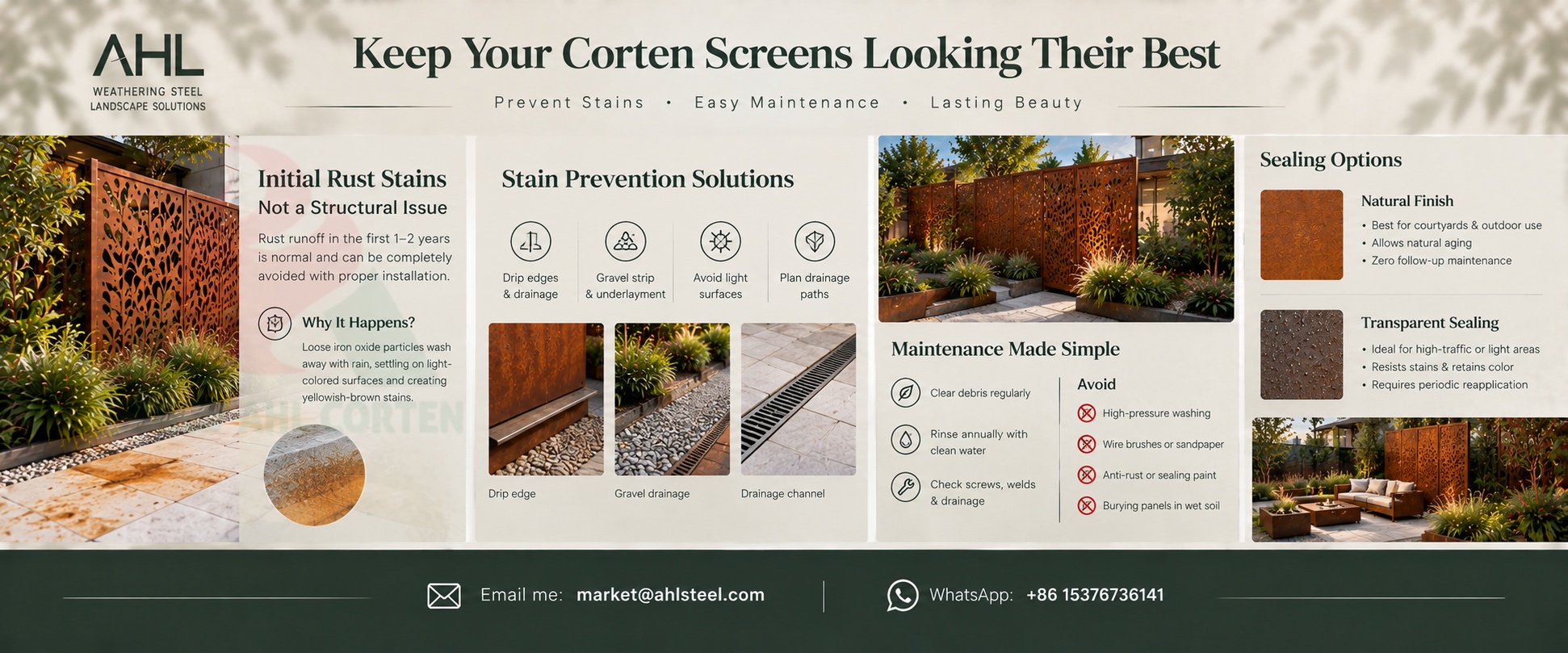
Initial Rust Stains After Corten Screen Installation
The rusting concerns raised by most users essentially refer to rust runoff contamination occurring within the first 1–2 years after installation—not structural rust damage—and can be completely avoided through proper installation techniques.
Causes of Rust Stains
During the early stages of aging, loose iron oxide particles on the steel surface are washed away by rain, settling on light-colored stone, concrete, wooden floors, and light-colored gravel, forming stubborn yellowish-brown stains.
This phenomenon occurs only during the active aging phase; once the screen has fully matured and the rust layer has solidified, it will no longer produce stains.
Practical Stain Prevention Solutions
Install drip edges at the base, water collection trays, and concealed drainage channels to precisely direct the flow of rust water.
Lay a gravel drainage strip at the base of the screen and use a sacrificial underlayment to absorb stains, thereby protecting the main paving.
Strictly avoid areas with light-colored, high-gloss stone or white concrete, and plan drainage paths in advance.
AHL Customized Stain-Prevention Optimization Services
For high-end gardens and commercial projects, we offer pre-rusted finished panels, custom drainage structures, and specialized support feet to resolve staining issues at the source while maintaining both aesthetics and texture.
Want the Latest Catalog for Corten Privacy Screen? Contact Us!
Corten Screen Post-Installation Maintenance Guidelines
Weathering steel is designed for extremely low maintenance; it requires no painting or anti-corrosion treatment. Simple, basic maintenance is all that’s needed to ensure decades of stable use.
Basic Daily Maintenance Procedures
Regularly clear fallen leaves, mud, sand, and weeds from the base to prevent prolonged dampness and standing water.
Annually rinse the surface with low-pressure clean water to remove dust, contaminants, and bird droppings, keeping the panels clean.
Periodically inspect mounting screws, welds, and drainage holes to ensure there is no loosening or blockage.
Absolutely Prohibited Practices
Do not use a high-pressure water jet: This will strip away the formed passivation layer, causing a new, mottled layer of rust to form on the panels and leaving permanent color variations.
Do not scrub with wire brushes or sandpaper: This will leave foreign metal particles on the surface, causing black spots and pitting corrosion.
Do not apply ordinary anti-rust or sealing paint: This will seal the breathable layer, blocking the natural aging process and leading to internal rot and damage.
Do not bury the underside of the panels directly in wet soil or organic matter.
Recommendations for Sealing the Surface
Natural, Unsealed Finish: Suitable for courtyards and long-term outdoor settings; allows for sustainable natural aging, with the texture improving year by year and requiring zero follow-up maintenance.
Transparent Sealing Treatment: Suitable for high-traffic areas or those adjacent to light-colored paving; provides short-term stain resistance and color retention but halts the aging process, requiring periodic reapplication.
Want the Latest Catalog for Corten Privacy Screen? Contact Us!
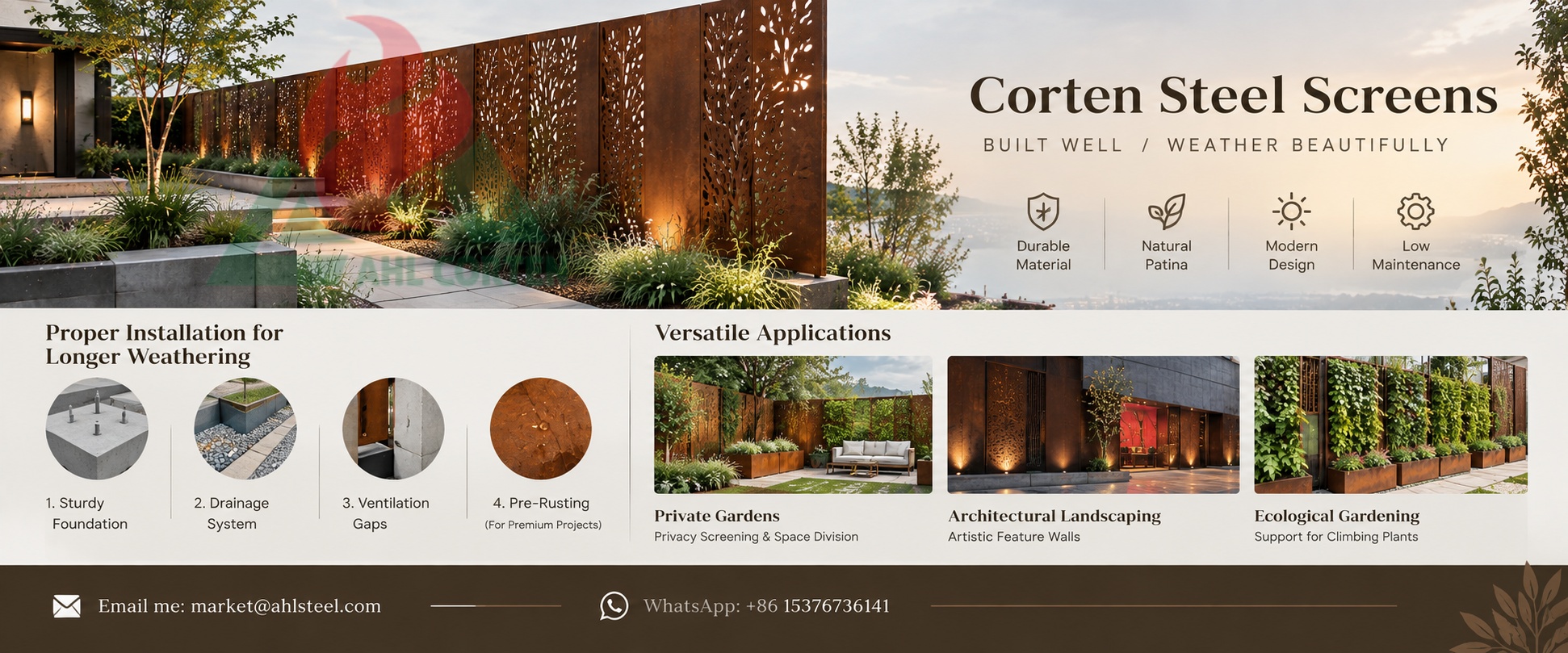
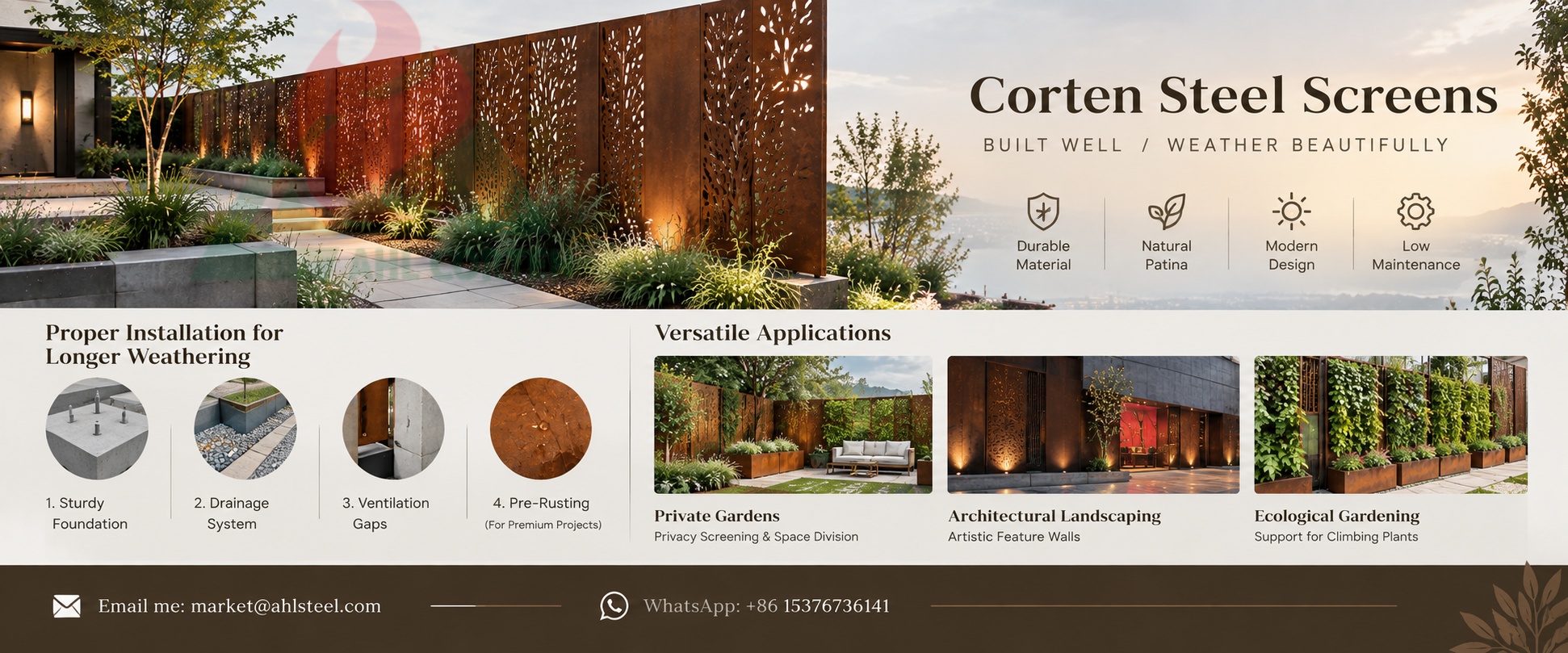
How to Install a Corten Screen for Better Weathering
Sturdy Foundation Construction
Use a reinforced concrete base that meets local wind pressure standards to prevent the screen from tilting or shifting, ensuring long-term structural stability.
Custom Drainage System Design
Prevent water accumulation on the decorative metal screen surface and at the base by utilizing drainage channels, a gravel base, and sloped water-diverting structures to ensure rapid water drainage.
Providing Ventilation Gaps
Leave a 25–50 mm ventilation gap between the screen and walls or obstructions to ensure even airflow on both sides and a uniform patina.
Upgraded Pre-Rusting Process for High-End Projects
For commercial storefronts, hotel courtyards, and high-end private residences, a factory-accelerated rusting process is available. This ensures the screen displays a mature, vintage texture upon installation, avoiding initial issues such as uneven patina and stains.
Mainstream Applications of Weathering Steel Screens
Private Gardens: Privacy Screening and Space Division
Screen utility areas, storage spaces, and views from neighboring properties, while simultaneously dividing the space into leisure areas, bonfire zones, and planting areas to enhance the garden’s sense of depth.
Architectural Landscaping: Artistic Feature Walls
Used for architectural entrances, commercial atriums, and hotel courtyard feature walls; paired with lighting systems to create sophisticated light-and-shadow effects.
Ecological Gardening: Support Structures for Climbing Plants
Serves as a support framework for climbing plants; paired with weathering steel planters, edging, and water features from the same series to create an integrated outdoor landscape system.
Want the Latest Catalog for Corten Privacy Screen? Contact Us!
Frequently Asked Questions and Installation Pitfalls to Avoid
Do not expect the color to remain unchanged permanently after installation; natural color fading is the core value of weathering steel.
Do not place bare panels directly against light-colored stone or white concrete; plan for stain prevention and drainage in advance.
Avoid covering the bottom with soil, allowing water to pool, or piling up dead branches and fallen leaves to prevent localized corrosion.
Do not install panels flush against walls without ventilation gaps to prevent uneven aging and severe color discrepancies.
Standard courtyard construction methods are not suitable for coastal or industrial areas; thicker panels and customized corrosion-resistant solutions are required.
Do not cut the panels on-site without authorization, as this damages the factory-applied corrosion-resistant edges and compromises the overall texture and lifespan
Why Choose a Custom Corten Screen?
1. High-Quality Materials and Full-Range Customization
Made from high-purity weathering steel, our products support sheet thicknesses ranging from 2 to 10 mm, meeting the structural and wind-resistance requirements for various settings, including residential gardens, commercial spaces, and coastal areas.
2. Artistic Design
We offer laser-cut geometric shapes, botanical motifs, logos, and regionally inspired patterns. You can customize the openwork ratio to balance privacy, natural light, and ventilation. Custom drip edges and reinforced folded edges are incorporated to structurally prevent water accumulation and corrosion.
3. Backed by Professional Craftsmanship
We offer a factory-based accelerated rusting process to eliminate initial mottling and staining, ensuring a mature, sophisticated finish upon installation.
4. One-Stop, End-to-End Service
From conceptual design, pattern customization, and manufacturing to on-site installation guidance and environmental adaptation, we provide dedicated end-to-end services tailored to all types of landscaping and architectural projects.
Frequently Asked Questions (FAQ)
Will Weathering Steel Screens Continue To Rust Indefinitely?
No, they will not rust indefinitely. The first 1–3 years constitute an active aging period during which discoloration is noticeable; once fully matured, the rust layer solidifies, resulting in only subtle color variations, and the structure becomes completely stable.
Will Rusted Steel Screens Rust Through or Become Damaged?
Screens installed according to specifications and maintained properly will not rust through. Localized corrosion and damage will only occur in abnormal environments characterized by prolonged water accumulation, salt fog corrosion, or poor ventilation.
Do Corten Steel Screens Need to Be Painted for Corrosion Protection?
No. Painting disrupts the steel’s natural corrosion-resistant mechanism, hinders the natural aging process, and significantly shortens its service life; this is considered an incorrect installation practice.
How Can Rust Stains Be Completely Prevented?
Prioritize factory-pre-rusted panels, combined with a professional drainage system and a gravel base, while avoiding light-colored permeable paving. This approach can almost completely eliminate staining issues.
Is Weathering Steel Suitable for Use Near the Coast or In Industrial Areas?
It can be used, but standard garden solutions cannot be applied directly. Thicker panels, optimized drainage, and enhanced ventilation are required to adapt to high-salt and high-pollution conditions.
Are You Ready to Choose an Outdoor Corten Screen That’s Right for You?
The ongoing rusting of weathering steel screens after installation is not a quality defect, but rather a unique aspect of their natural aesthetics and self-protective properties.
From the initial raw metallic color, through the dynamic color changes in the middle phase, to the stable, vintage rust hue in the later stages—the complete aging cycle of 1–3 years transforms the screen into a work of landscape art that evolves over time.
As long as you ensure proper ventilation, drainage, and basic maintenance while avoiding installation errors, weathering steel screens can provide decades of reliable service, combining aesthetic appeal, texture, and value for money.
If you need customized solutions, dimensional designs, or anti-stain installation recommendations for your home garden or commercial project, feel free to contact the AHL professional team at any time to receive a personalized, one-on-one implementation solution.
Want the Latest Catalog for Corten Privacy Screen? Contact Us!