Choosing the right corten steel planter size is not simply about finding a box that fits an empty corner. The planter must provide enough soil volume and depth for the plant at maturity, while also fitting the available space, drainage route, delivery access and visual scale of the landscape.
A planter that is too small can restrict root growth and dry out quickly; a planter that is unnecessarily large increases fill weight, cost and installation complexity. Container-growing guidance consistently emphasises matching the container to the plant’s mature root system and providing reliable drainage.
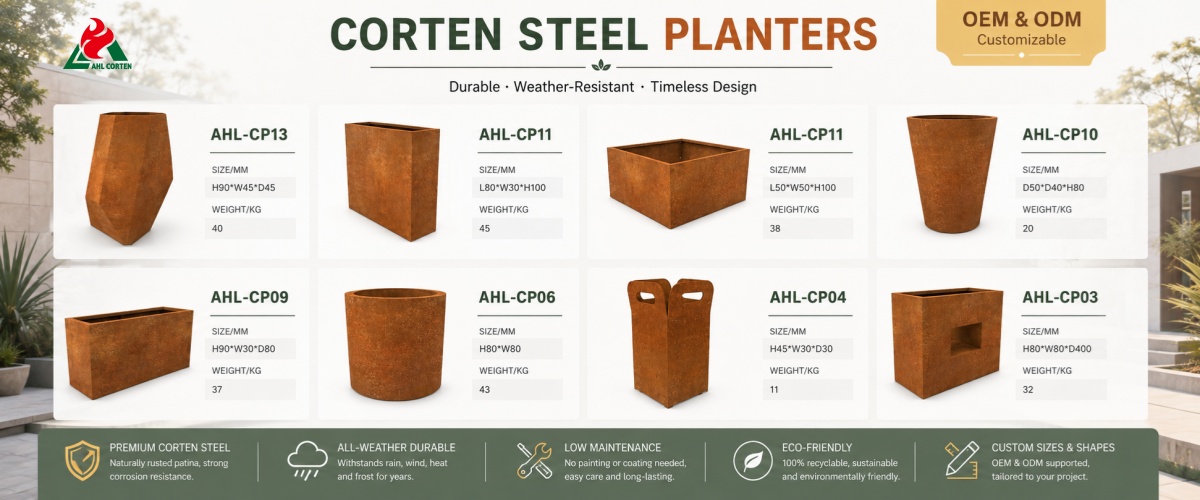
Want the Latest Catalog for Corten Steel Planters? Contact Us!
Quick Answer: What Size Should You Choose?
| Planting Purpose |
Suggested Internal Soil Depth |
Typical Planter Approach |
Key Check Before Ordering |
| Herbs, Annuals, and Shallow-Rooted Plants |
200–300mm |
Low rectangular or square planter. |
Confirm drainage provision and available sun exposure. |
| Perennials, Ornamental Grasses, and Small Shrubs |
300–450mm |
Medium planter or trough. |
Check mature plant width and access for irrigation and maintenance. |
| Large Shrubs and Screening Plants |
450–600mm |
Deep trough or large rectangular planter. |
Confirm sufficient root volume, drainage, irrigation needs, and wind exposure. |
| Small Trees or Specimen Planting |
600mm+ |
Reinforced large planter. |
Check root-ball dimensions, filled weight, wind loading, anchoring, and delivery access. |
| Large Trees or Public-Realm Planting |
Project-specific |
Engineered planter system. |
Confirm structural design, root-zone volume, lifting strategy, anchoring, irrigation, and drainage plan. |
Direct answer: Select the planter based on the plant’s mature root depth and spread, then confirm that the total footprint suits the available space and drainage layout. For most decorative shrubs and grasses, a medium planter with 300–450 mm of usable soil depth is a practical starting point. Large shrubs and trees require deeper, wider and structurally reinforced planters. Shallow-rooted crops can grow in 150–200 mm of media, while many vegetables and larger plants need 300 mm or more.
Want the Latest Catalog for Corten Steel Planters? Contact Us!
Choose by Plant Growth, Not Nursery Pot Size
Start With Mature Root Requirements
Specify the plant’s mature height, canopy width, root-ball dimensions and expected root depth.
Do not size a permanent planter around the plant’s current nursery container.
Allow space for roots, soil moisture, nutrients and seasonal growth.
For trees and tall shrubs, assess wind load, irrigation and anchoring in addition to soil volume.
Match Depth, Width and Length
| Dimension |
What It Controls |
Common Mistake |
| Soil Depth |
Root development, available soil volume, and moisture stability. |
Selecting a visually tall planter with insufficient usable internal soil depth. |
| Internal Width |
Root spread, plant spacing, and long-term growing room. |
Crowding screening plants or multi-plant arrangements into a narrow planter. |
| Length |
The number of plants, spacing between root zones, and overall planting layout. |
Choosing a long planter without sufficient internal support, drainage points, or expansion planning. |
| Overall Height |
Visual impact, planting access, maintenance comfort, and filled weight. |
Ignoring the difference between external height and usable internal soil depth. |
Use internal planting dimensions in drawings, not just external dimensions. Folded rims, liners, drainage layers and raised bases all reduce usable soil volume.
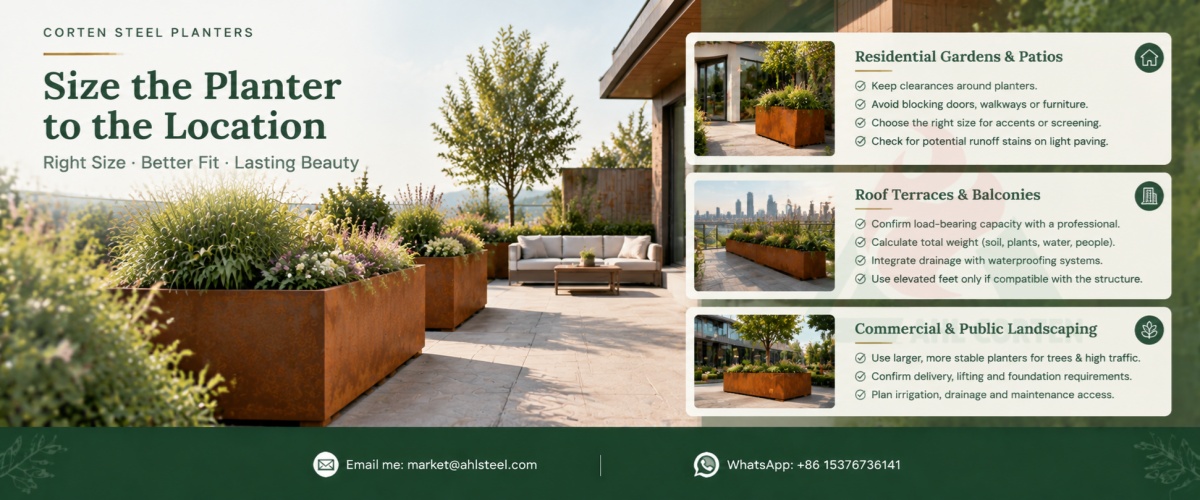
Size the Planter to the Location
Residential Gardens and Patios
Ensure there is sufficient clearance around planters.
Avoid blocking doors, walkways, gutters, or outdoor furniture.
Smaller planters are suitable for accent planting, while larger, elongated planters (troughs) should be chosen for screening or space division.
Before placing new weathering steel planters next to light-colored paving, consider potential runoff stains.
Roof Terraces and Balconies
Before selecting sizes, be sure to confirm the floor slab’s load-bearing capacity with an architect or structural engineer.
You must calculate the total weight of the planter, saturated soil, plants, irrigation water, and people or maintenance equipment.
Ensure that the planters’ drainage outlets are properly integrated with the building’s waterproofing and roof drainage systems.
Elevated footings or bases may only be used if they are compatible with the roof construction and drainage design.
Commercial and Public Landscaping
For trees, long-span installations, areas subject to frequent public contact, and areas requiring access for maintenance equipment, specify larger, more structurally stable planters.
Confirm delivery routes, the operating radius of forklifts or cranes, lifting points, and foundation requirements.
Coordinate the planning of irrigation systems, drainage access points, and long-term access routes for replacement or maintenance.
Want a Custom Decorative Metal Planter? Contact Us! Contact Us!
Treat Drainage as a Size Requirement
The right size planter must have a workable drainage strategy. Waterlogged soil displaces the air roots need and can lead to poor plant growth or root damage.
| Drainage Detail |
Why It Matters |
| Multiple, Distributed Drainage Holes |
Prevents water from collecting at one end of a long planter and supports more even drainage across the full planting area. |
| Geotextile or Suitable Separation Layer |
Helps retain soil and planting media while keeping drainage openings clear and functional. |
| Raised Feet or Recessed Base |
Supports airflow below the planter and gives water a clear route away from the base. |
| Planned Runoff Path |
Reduces standing water, limits surface pooling, and helps protect surrounding paving, decking, and building finishes. |
| Accessible Drainage Design |
Allows future inspection, cleaning, and removal of debris that could block drainage points. |
Avoid using a gravel layer as a universal solution. It takes up root space and, in some container systems, can worsen drainage behaviour; use a planting and drainage detail appropriate to the project’s soil mix, hole layout and installation conditions.
Want a Custom Decorative Metal Planter? Contact Us! Contact Us!
Confirm Structure, Steel Thickness and Handling
Size changes structural requirements. As planter length, height and soil depth increase, so do soil pressure, saturated weight and the risk of side-wall deflection.
| Planter Scale |
Typical Specification Focus |
| Small Decorative Planter |
Finished edges, drainage holes, and a stable base. |
| Medium Garden Planter |
Suitable plate thickness, base drainage, and high-quality corner construction. |
| Long Screening Trough |
Folded top rim, internal bracing, multiple drainage outlets, and adequate support along the full length. |
| Tree Planter or Public Installation |
Reinforced base frame, engineered structural support, lifting provisions, drainage strategy, and anchoring plan. |
Do not select steel thickness from a generic chart alone. Confirm the final plate thickness, folded rims, internal bracing, welded corners, base structure and handling method against the approved dimensions and planting load. Commercial planter guidance likewise treats drainage, reinforcement and base detailing as linked decisions.
Want a Custom Decorative Metal Planter? Contact Us! Contact Us!
AHL Custom Corten Steel Planters and Project Support
AHL can custom-manufacture rusted steel planters in various sizes based on specific plant types, site layouts, and project requirements. Our customization services include the following:
Custom Dimensions and Specifications: Flexible customization of length, width, height, and steel plate thickness.
Structural and Functional Reinforcement: Optional features include top flanges, reinforced frames, drainage holes at specified locations, raised feet, waterproof liners, and pre-drilled irrigation holes.
Want to Get Your Own Rusted Steel Planter? Click to Customize!
FAQ
1. How Deep Should a Corten Steel Planter Be?
It depends on the plant. Shallow-rooted annuals may work in low planters, while shrubs, screening plants and trees need progressively more soil depth and root volume. Confirm requirements with the plant supplier or landscape designer.
2. Can I Use a Large Planter for a Small Plant?
Yes, but the design should still provide good drainage and a suitable planting mix. A very large planter increases weight, material use and watering considerations without always benefiting the smaller plant.
3. Do Large Corten Planters Need Reinforcement?
Often, yes. Long, deep or tall planters can require folded rims, internal bracing, reinforced corners and a stronger base to resist wet-soil pressure and handling loads.
4. How Do I Prevent Water From Collecting In The Planter?
Specify distributed drainage holes, a clear outlet path, a suitable soil-separation detail and a raised or recessed base where appropriate. Check that outlets remain clear after planting.
Need the Right Planter Size for Your Landscape?
Send AHL your planting type, required soil depth, preferred dimensions, installation surface and project drawings. We can recommend a custom steel planter box with suitable reinforcement, drainage and finish for your garden, terrace, hotel or commercial landscape project.
Want to Get Your Own Rusted Steel Planter? Click to Customize!