Weathered steel planters have become a mainstream landscaping element in private gardens, rooftop gardens, hotel landscapes, and commercial plazas thanks to their unique vintage rusted finish and minimalist industrial aesthetic. Unlike ordinary metal planters, weathering steel is known for its exceptional durability in outdoor environments and is widely recognized as a long-lasting landscaping material.
However, many users notice a striking difference: some weathered steel planters develop rust perforations, flaking, and damage within just 2–4 years, while high-quality planters can last reliably for 25–50 years. This vast disparity in lifespan is not due to the material itself, but rather stems from differences in material selection, installation, drainage, and maintenance practices.
Most users face a key question: Will a weathered steel planter eventually rust through completely? Why do they age and break prematurely? How can structural corrosion be prevented to ensure decades of reliable use?
Drawing on professional landscape engineering standards, this article provides a comprehensive breakdown of the logic behind long-term maintenance for weathering steel planter boxes. From material principles, selection techniques, installation standards, drainage and soil preparation, site selection, and daily maintenance to a guide on avoiding common pitfalls, it offers a complete, actionable plan to help your weathering steel planters and enhance your landscape for decades to come.
Explore Long-Lasting Corten Steel Planters
Understand Why Corten Steel Can Last So Long
1. What Makes Corten Different From Ordinary Steel?
When ordinary carbon steel is exposed to the outdoors for extended periods, it will continue to rust, flake, and peel. The rust layer fails to provide protection and will continuously corrode inward, eventually causing the steel to thin and develop holes or cracks.
Weathering steel is a special type of alloy steel containing trace elements such as copper, chromium, and nickel. In natural outdoor environments, its surface spontaneously forms a dense, stable, brownish-red oxide layer—known in technical terms as a “patina.”
This rust layer possesses self-repairing capabilities; it firmly covers the steel substrate, isolating it from air, rain, and moisture, and preventing further corrosion of the internal steel. This is the core reason why weathering steel offers such exceptional durability.
2. Wet-Dry Cycle: An Essential Condition for Corten Steel Formation
The formation of a stable patina relies on the natural cycle of wet and dry conditions. Rainwater and humid air initiate the oxidation reaction, while ventilation and air-drying allow the rust layer to gradually tighten and solidify.
After several months of natural weathering, the surface of the flower pot will gradually transition from the original deep gray of the steel to orange-yellow and reddish-brown, eventually forming a uniform, thick, vintage-style dark rust surface that offers peak protective performance.
If water accumulates for long periods, conditions remain persistently damp, or ventilation is poor, the dry-wet cycle is completely disrupted, and the rust layer cannot solidify and stabilize. The steel will continue to rust and become porous, with the rust flaking off and peeling, eventually leading to localized pitting, perforation, and deterioration.
3. Key Insight: Drainage Is Far More Important Than Surface Color
Many users place excessive emphasis on achieving a uniform and aesthetically pleasing rust color on the surface of the planters, yet overlook the core issue. When it comes to the service life of weathering steel planters, drainage and ventilation conditions are far more critical than whether the surface color is perfect.
Even if the rust color appears uniform and attractive, once drainage becomes blocked and water accumulates at the bottom, the rate of internal corrosion will accelerate significantly, leading to structural damage in just a few short years.
Order Custom Planters for Commercial Landscaping
Start with a High-Quality Corten Steel Planter
Choose Genuine Weathering Steel
Most low-priced imitation planters on the market are made of ordinary carbon steel with a spray-applied rust-effect coating, or thin, non-alloy steel. These products lack self-healing rust-proofing capabilities and will suffer extensive rusting and damage within 2 to 4 years.
Genuine weathering steel (Corten A/B, SPA-H, S355J0WP) features a proprietary alloy composition that naturally forms a stable protective rust layer, ensuring long-term durability. When purchasing, be sure to verify the material certification to avoid being sold inferior products.
Match Steel Thickness to Planter Size
| Planter Type |
Typical Use |
Recommended Considerations |
| Small Corten Planter |
Herbs, flowers, small patios |
A lighter structure may be suitable; prioritize drainage and stable feet. |
| Medium Garden Planter |
Shrubs, grasses, residential borders |
Choose a durable steel gauge with reinforced edges where needed. |
| Large Rectangular Planter |
Privacy plantings, commercial entrances |
Consider thicker steel, strong joints, drainage design, and internal support. |
| Deep Tree Planter |
Small trees, large root balls |
Use heavy-duty construction, a reinforced base, and professional placement. |
| Custom Commercial Planters |
Hotels, public spaces, developments |
Specify thickness, welds, liners, drainage, fixing points, and maintenance access. |
Check Drainage Design Before Ordering
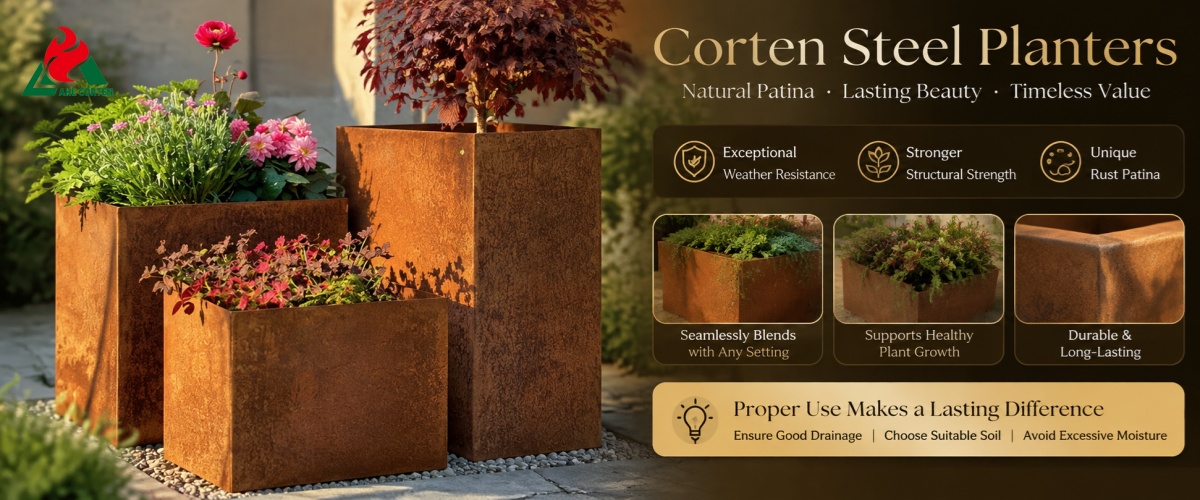
These high-quality, rusted steel planters are manufactured using a fully welded, seamless process and feature a top-folded edge design. This design eliminates sharp burrs while reinforcing the structural rigidity of the planter, ensuring it remains resistant to cracking and warping even with long-term use.
Additionally, they feature a scientifically designed drainage system, with drain hole sizes and spacing optimized through engineering to quickly drain standing water. This ensures long-term durability from a manufacturing perspective, eliminating the need for subsequent modifications.
Install It Correctly: The Foundation for Decades of Use
Place on a Stable, Level Surface
Rusted steel planters must be placed on a level, solid, and well-drained surface. Recommended surfaces include concrete, hard stone paving, compacted gravel, and hard landscaping surfaces with a drainage slope.
Do not place them directly on soft lawns, low-lying areas prone to water accumulation, uncompacted backfill, or bare soil surfaces that remain damp for extended periods. An uneven base can cause water to pool unevenly and distribute stress unevenly, leading to localized, persistent corrosion.
Raise the Planter Off the Ground
It is strictly prohibited to place the bottom of an outdoor metal planter in direct contact with the ground. Use risers, rubber pads, metal brackets, or stone bases to create a 10–50 mm ventilation gap.
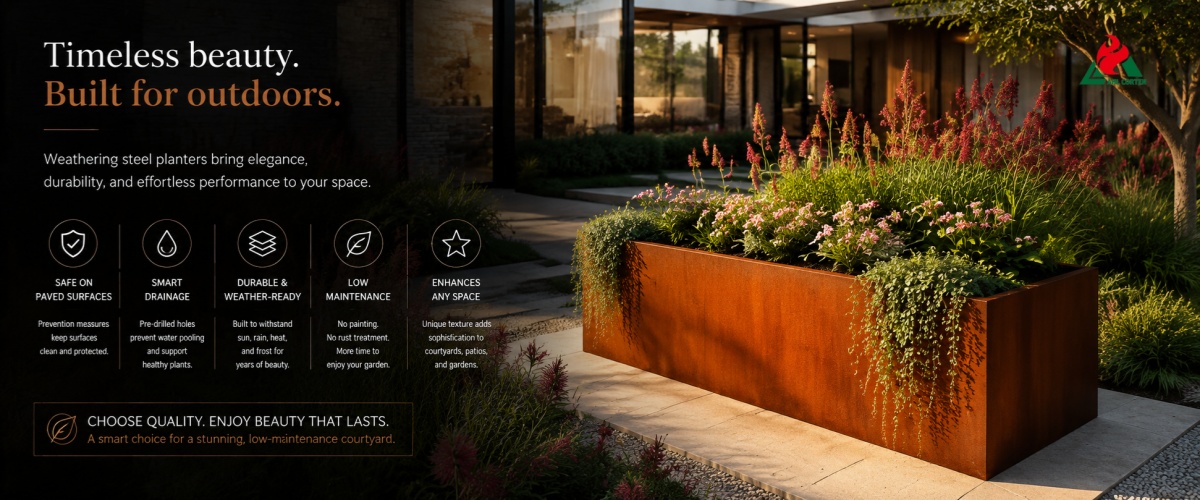
This elevated design keeps drainage holes unobstructed, accelerates drying of the bottom, improves air circulation, prevents prolonged moisture and rust buildup at the base, and significantly reduces rust stains on the ground.
Early Runoff Management
The first 6–12 months after installing a new metal garden planter constitute a weathering stabilization period, during which a small amount of rusty water runoff may occur, easily staining light-colored stone, tile, or wooden decks.
Contamination can be prevented by laying a dark-colored gravel buffer layer, installing a drip tray, or selecting pre-weathered planters, thereby balancing landscape aesthetics with planter maintenance.
Get Bulk Pricing for Large Planter Projects
Getting Drainage and Soil Right about Corten Planter
1. Regularly Inspect and Clear Drainage Holes
Clogged drainage holes are the primary cause of premature aging in flower pots. Soil buildup, plant roots, fallen leaves, debris, and weeds can all block the drainage channels.
It is recommended to inspect the drainage holes at least once a year; increase the frequency during rainy seasons, in coastal areas with high humidity, and in areas with automatic irrigation systems. You can perform a simple water test to ensure that standing water drains quickly and does not remain in the pot.
2. Use Suitable Growing Media
Heavy clay and garden soils prone to compaction retain water for extended periods, keeping the inner walls of the planter constantly damp. This compromises the stability of the rust coating and accelerates internal corrosion.
For outdoor planting, use a lightweight soil mix combined with well-aerated materials such as compost, river sand, perlite, and volcanic rock to improve drainage and aeration and prevent prolonged waterlogging.
3. Do Not Overfill the Planter
When filling the pot, do not pack the soil all the way to the top; leave a standard 50mm clearance at the top. This prevents soil and muddy water from spilling over the rim during rain or regular watering.
This not only prevents stubborn rust stains and water marks from forming on the outer walls—keeping the pot looking clean—but also prevents soil buildup from clogging the drainage holes, ensuring the drainage system remains unobstructed over the long term.
4. Use Internal Protective Liners Appropriately
Internal liners are not mandatory; they are generally unnecessary in standard, well-ventilated garden environments. However, in high-humidity environments, with frequent watering, on rooftop terraces, or in high-end landscaping settings, breathable geotextile fabric or embossed drainage panels may be installed.
Internal liners reduce direct contact between wet soil and the steel inner walls without blocking drainage holes. They help optimize the internal moisture balance and further extend the pot’s service life.
5. Standard Layered Planting Structure
Professional, long-lasting layered planting: Clear drainage holes at the bottom → Elevate the planter off the ground → Lay a gravel drainage layer → Cover with breathable geotextile → Fill with lightweight potting soil → Cover the top layer with root-protecting substrate, ensuring drainage and aeration throughout the entire process.
Start Your Hotel, Resort, or Retail Planters Project
Choose the Best Location for Your Corten Planter
1. Optimal Placement Locations
An open area with good ventilation and a balanced cycle of wet and dry conditions is the best place to position durable weathering steel planters. A cyclical environment of natural rainfall and air-drying helps the rust layer form quickly and stabilize.
Hard surfaces with a slight drainage slope, gravel landscaping areas, and open courtyards can all maximize the self-healing and weather-resistant properties of weathering steel.
2. High-Risk Locations Requiring Special Protection
Long-term shaded corners, windless areas against walls, locations directly exposed to sprinkler spray, areas with high humidity and frequent rainfall, and areas around swimming pools will all continuously increase the humidity around the planters, hindering the stabilization of the rust layer.
In such scenarios, ventilation should be improved, direct exposure to sprinkler spray minimized, and the frequency of regular cleaning increased to prevent corrosion issues caused by persistent moisture.
3. Special Maintenance for Coastal Salt Fog Environments
Coastal salt fog and chloride ions can damage the structure of the weathering steel’s rust layer, causing it to become brittle and flake off, thereby preventing the formation of a stable protective layer. Areas within 500 meters of the coast are considered high-corrosion zones and require special protection.
In coastal settings, it is recommended to use flower pots made of thicker steel plates, place them in locations sheltered from the wind and salt spray, regularly rinse salt deposits from the surface with clean water, and increase the frequency of inspections to prevent continuous salt fog erosion.
4. Precautions for Placement on Rooftops and Balconies
For rooftops and balconies, the load-bearing capacity must be calculated in advance, and dedicated drainage paths must be planned. Avoid water accumulation and backflow to prevent prolonged moisture exposure and corrosion at the bottom of the flower pots.
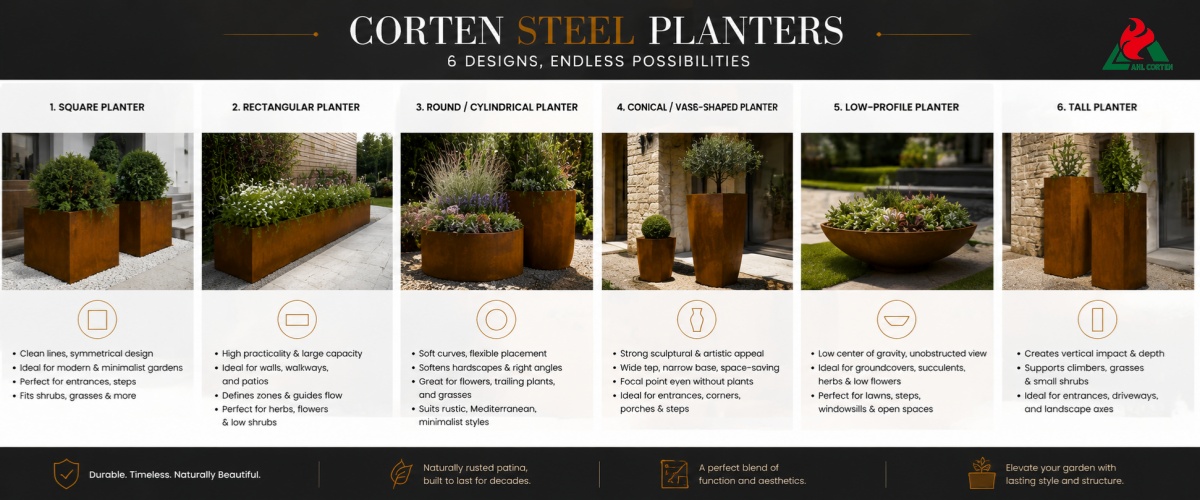
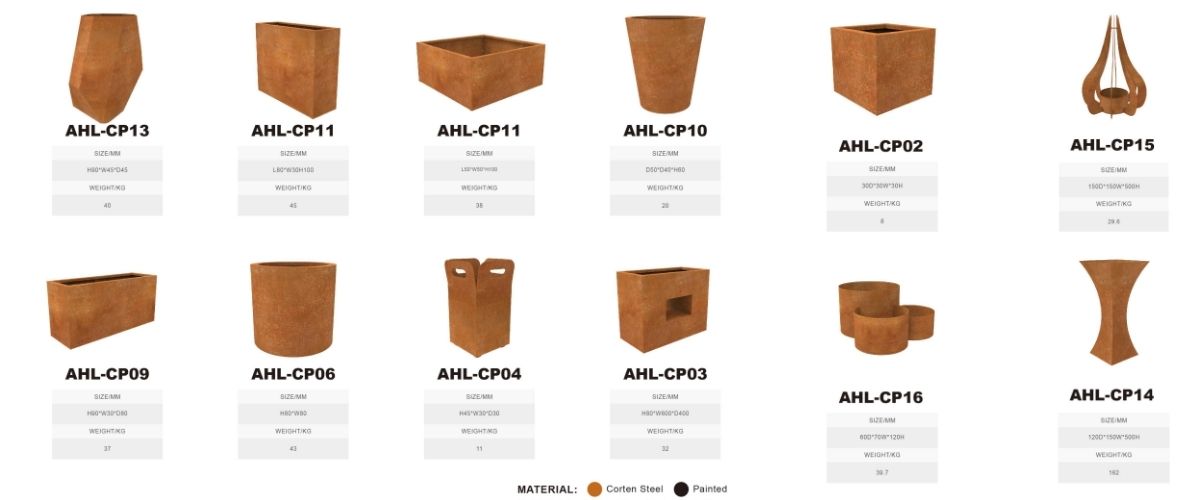
Browse Corten Planter Sizes and Shapes
Maintaining the Patina Without Damaging It
1. Let Natural Weathering Take Its Course
During the first 3–6 months after installation, the new landscape planter may exhibit uneven coloring, localized orange-yellow rust spots, and slight powdering—all of which are part of the normal weathering process. This is an essential stage in which the steel self-cures and forms a protective layer.
Never sand, spray paint, or apply rust removers. Forced intervention will disrupt the oxidation process, leading to a mottled appearance later on, compromising the protective layer, and significantly shortening the product’s lifespan.
2. Clean Gently and Only When Needed
For daily cleaning, simply use clean water with a soft-bristled brush or a lint-free soft cloth to wipe away dust, bird droppings, and fallen leaves. For stubborn stains, use a diluted neutral detergent and rinse thoroughly with clean water afterward.
Never use high-pressure water jets at close range, scrub with a wire brush, or clean with acidic or alkaline disinfectants. Such actions will directly strip away the mature protective rust layer, exposing the steel to secondary rusting.
3. Remove Debris Before It Traps Moisture
Fallen leaves, dead branches, silt, and weeds that accumulate along the rim, at the bottom, and in crevices of the planter can form a water-retaining layer that traps moisture and prevents the planter from drying out.
Simply clearing debris from around your durable metal planter once a month to keep the bottom well-ventilated and clean can effectively prevent localized, persistent corrosion and extend the planter’s lifespan at minimal cost.
Common Mistakes That Shorten Corten Planter Lifespan
Most weathering steel planters age and break prematurely not because of material defects, but due to improper daily use. The following common mistakes should be avoided:
- Clogged drainage holes: Standing water remains trapped inside for long periods, causing continuous corrosion of the inner walls and root rot, which hols out the planter’s structure from the inside.
- Placing the planter directly on the ground: When the bottom is in direct contact with a damp surface, the natural cycle of drying and wetting cannot occur, causing the steel base to rust and deteriorate due to prolonged moisture.
- Heavy, impermeable soil: Prolonged waterlogging and saturation of the potting mix continuously erode the steel inner walls of the planter.
- Frequent and excessive watering: Frequent spraying or direct contact from automatic sprinklers keeps the outer walls constantly damp, preventing the protective rust layer from solidifying.
- Long-term accumulation of debris: Fallen leaves and decomposing organic matter trap moisture, causing localized pitting and corrosion.
- Aggressive cleaning and maintenance: Scrubbing with hard objects, cleaning with acids or alkalis, and high-pressure washing directly damage the protective rust layer.
- Large-sized planters made of thin steel sheets: Insufficient load-bearing capacity of the steel sheets leads to deformation of the planter and cracking of welds due to the pressure of wet soil.
- Lack of maintenance awareness: The misconception that weathering steel is completely maintenance-free leads to a failure to check drainage or remove debris year-round, accelerating aging and damage.
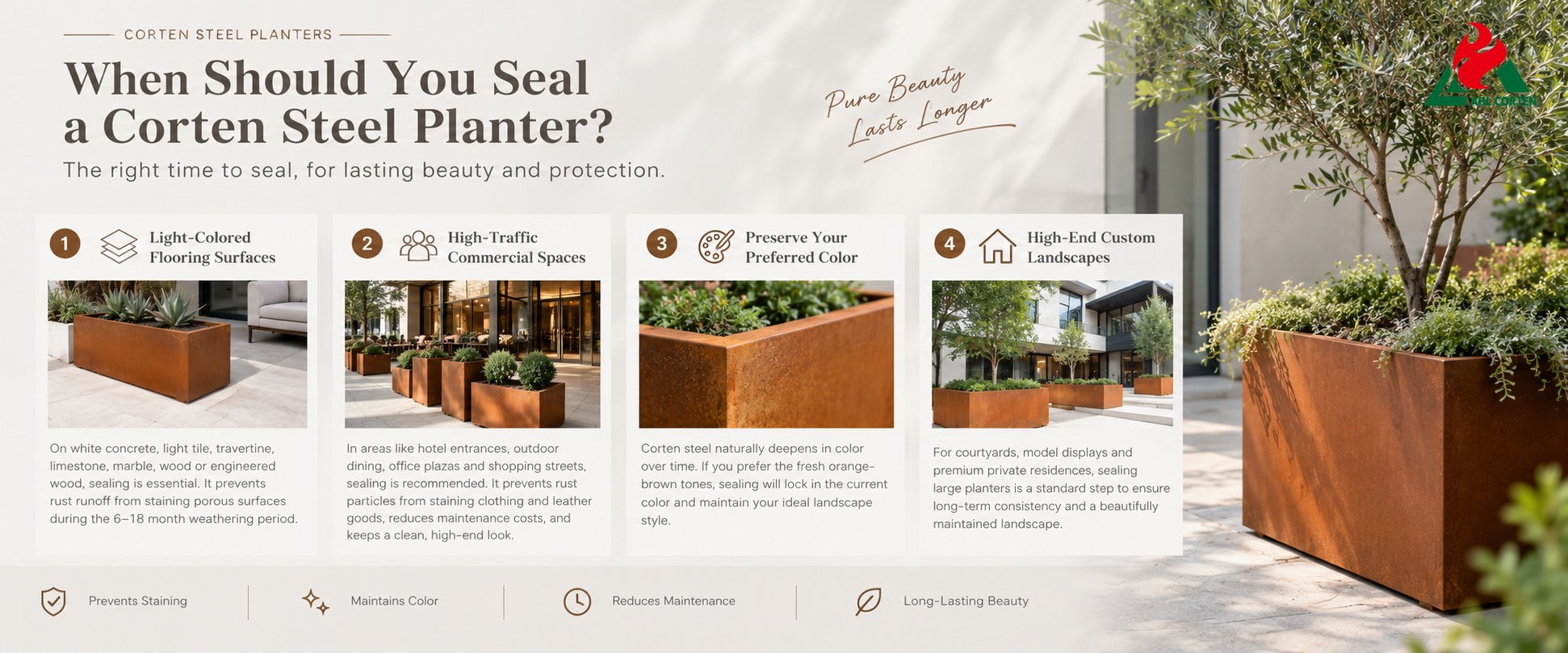
Should You Seal a Corten Steel Planter?
1. Scenarios Where Sealing Is Not Required
Flower pots placed on bare soil, lawns, or gravel areas in the yard do not require sealing. The natural cycle of wetting and drying allows a rust layer to form steadily, preserving the original weathered texture and requiring virtually no maintenance.
2. Situations Where Sealing Is Recommended
Light-colored stone, tile, wood decks, and high-end commercial paving surfaces may benefit from surface sealing. This effectively blocks initial rust runoff, prevents staining of the surface, and helps maintain a uniform rust color, keeping the landscape neat and tidy.
3. Key Professional Advice
Sealing is a supplementary measure for aesthetics and protection; it is not essential for extending the lifespan of the material. As long as proper drainage, ventilation, and standard installation are ensured, the material can remain stable and functional for decades even without sealing.
Get a Quote for Heavy-Duty Corten Planters
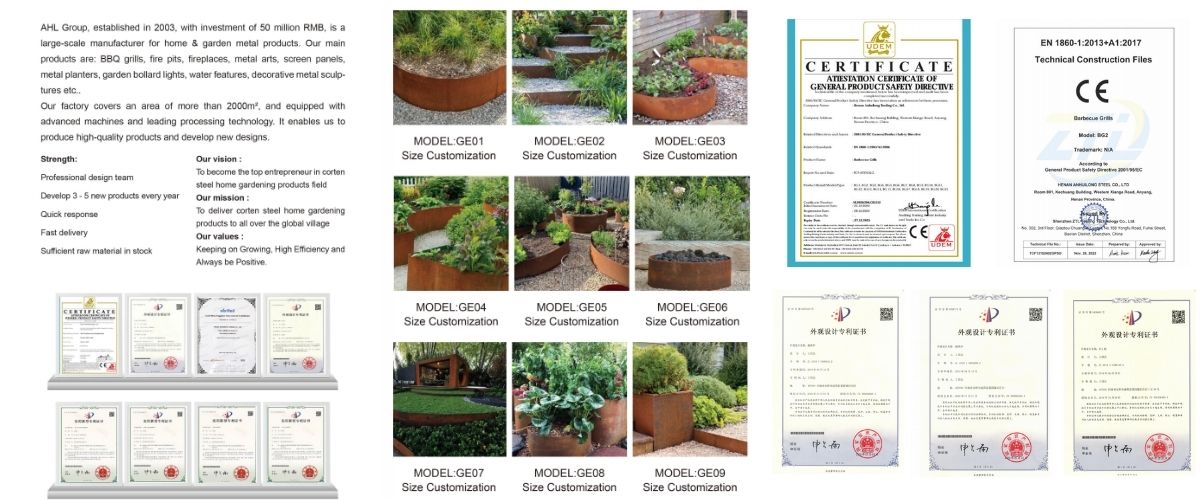
AHL Corten Steel Planters: The Professional’s Choice for Landscapes That Last for Decades
AHL specializes in commercial-grade weathering steel landscape planters. Designed to meet the demands of long-term outdoor use in every aspect—from materials and craftsmanship to structure—they perfectly address the common issues of ordinary planters: short lifespan, fragility, and high maintenance.
We select authentic, certified weathering steel and offer thickened sheets in multiple specifications ranging from 2.0 mm to 5.0 mm, rejecting thin-gauge imitations to ensure structural stability and weather resistance from the source.
Leveraging precision engineering, we customize a scientific drainage hole layout, an integrated raised base, and internal reinforcement structures to prevent water accumulation, corrosion, and pot deformation.
We offer factory-customized pre-weathering, color stabilization, and protective lining options, ensuring the planters are ready for use immediately upon installation. This eliminates initial rust water contamination issues and makes them ideal for high-end commercial and private residential landscaping projects.
We also provide a full range of weathering steel landscaping accessories, including edging, feature walls, screens, and water features, enabling the creation of a cohesive, long-lasting outdoor landscape.
Get a Free Quote
Frequently Asked Questions (FAQ)
Q1: What Is the Typical Service Life of a Standard Weathering Steel Planter?
When made from qualified materials, installed according to specifications, and properly maintained, a durable metal planter can reliably serve for 25–50 years in typical outdoor environments, with an even longer lifespan under optimal conditions.
Q2: Will a Weathering Steel Planter Rust Through Completely And Become Unusable?
It will not rust through normal use. Only under conditions such as prolonged water accumulation, salt fog corrosion, failed drainage, or poor-quality materials will continuous rusting and perforation occur.
Q3: Must Weathering Steel Planters Have Drainage Holes?
Drainage holes must be provided and kept unobstructed. Drainage is essential for the long-term durability of weathering steel; standing water will completely destroy the protective rust layer, leading to irreversible corrosion.
Q4: Do Raised Metal Planters Have to Be Placed On a Raised Surface?
In settings with hard surfaces, such as patios and balconies, it is strongly recommended to elevate the planters to ensure ventilation and drainage at the base. In natural soil settings, this requirement can be somewhat relaxed, but elevating the planter is still more beneficial for long-term maintenance.
Q5: Can Weathering Steel Planters Be Used In Coastal Areas?
Yes, they can be used, but you should select thicker-gauge material, avoid areas exposed to wind-borne salt spray, regularly rinse off salt deposits with clean water, and perform frequent inspections and maintenance to adapt to the highly corrosive coastal environment.
Q6: Is Sealing Necessary to Extend the Lifespan of the Planters?
No. Sealing is used solely to prevent staining and lock in color; the core lifespan of the planters depends on the material, drainage, installation, and maintenance, and is not directly related to sealing.
Summary
The key to decades of reliable use for weathering steel planters lies not in the material itself, but in scientific usage and maintenance practices. High-quality base material is the foundation, proper installation is a prerequisite, unobstructed drainage is essential, and regular maintenance is the guarantee.
By understanding the rusting mechanism caused by the wet-dry cycle in weathering steel, avoiding common maintenance pitfalls, and ensuring proper site selection, drainage, cleaning, and protection, you can ensure that the planters age gracefully, remain durable over the long term, and develop a unique, vintage aesthetic.
If you want to effortlessly create a long-lasting, refined outdoor landscape, choose AHL’s custom weathering steel planters. Backed by professional craftsmanship and engineering design, they deliver low-maintenance, stable, and aesthetically pleasing landscape results that last for decades.
Get a Custom Corten Planter Quote