Corten steel screens are a popular choice for creating garden spaces, providing privacy and establishing visual focal points in courtyards. With their unique weathered, rusted finish, they blend naturally with plants, stone, and natural wood, offering strong architectural appeal.
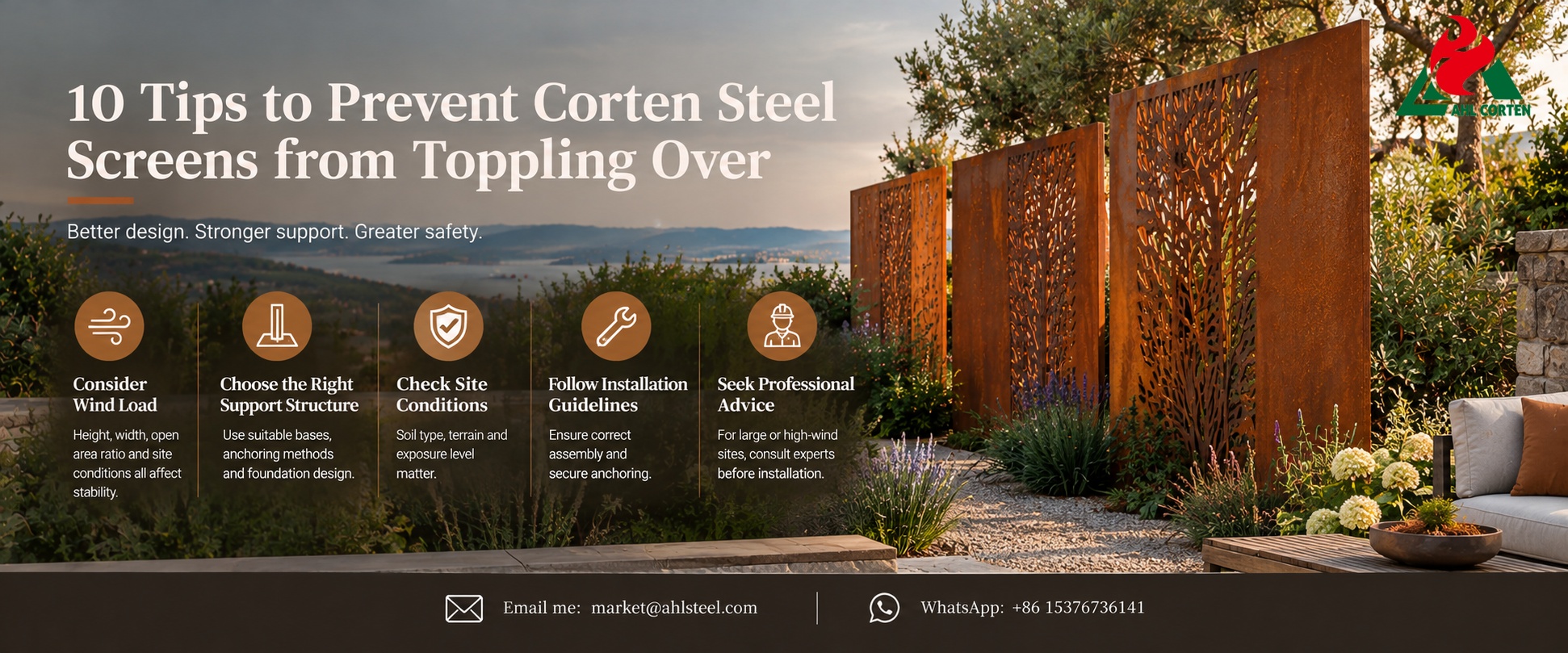
However, tall, wide screen panels act like sails in strong winds and are subjected to significant lateral wind forces.
Wind loads are not determined solely by the thickness of the steel plate; the panel’s height, width, open area ratio, base structure, anchoring method, and soil conditions all directly affect overall stability.
Many weathering steel screens that appear heavy and solid still pose a risk of overturning if their support design is inadequate.
This article compiles 10 practical recommendations to help you mitigate risks during product selection, site preparation, and construction and installation.
Special Note: For large laser cut metal screens, open, wind-exposed sites, screens installed alongside retaining walls, or projects subject to high wind pressures, support and anchoring plans should be reviewed by professionals in conjunction with on-site conditions.
Want the Latest Catalog for Corten Steel Screens? Contact Us!
Why are Corten Steel Screens Vulnerable to Strong Winds?
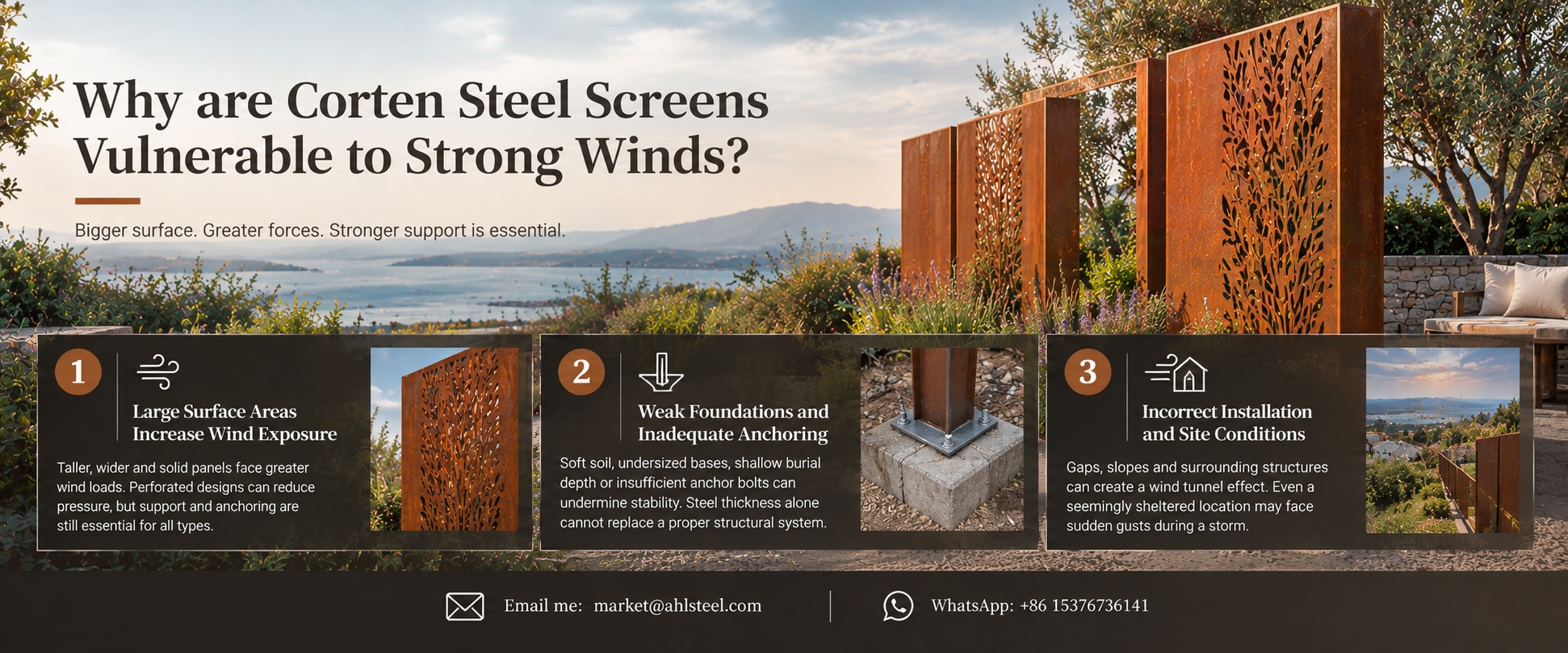
1. Large Surface Areas Increase Wind Exposure
Solid corten steel fence panels have a fully exposed surface to the wind. The taller and wider the screen, the larger its wind-exposed area, and the thrust it must withstand during strong winds increases significantly.
The open area ratio of the screen is equally critical. Perforated or lattice designs allow some airflow to pass through, reducing wind loads; solid panels offer virtually no pressure relief channels.
However, regardless of whether the corten laser cut panels is perforated or not, the support and anchoring systems cannot be omitted—the only difference is the magnitude of the forces they must withstand.
2. Weak Foundations and Inadequate Anchoring
Even if the corten garden screens are meticulously crafted, the structure will still become unstable if the foundation, anchorage components, and site conditions are not properly matched.
Soft soil, undersized bases, insufficient burial depth, and anchor bolts that fail to meet load requirements can all compromise overall stability.
Steel plate thickness alone cannot compensate for a weak foundation. Columns, base plates, foundations, and anchorage components must function as an integrated structural system to bear loads collaboratively.
3. Incorrect Installation and Site Conditions
Wind distribution within a yard is not uniform. Gaps between buildings, slopes with elevation differences, and surrounding structures can all create a wind tunnel effect, generating sudden, strong gusts.
A location that appears sheltered on a windless day may experience a sudden surge in wind speed during a storm.
Support solutions should not rely solely on product specifications; installation sites must be evaluated on-site.
Want the Latest Catalog for Corten Steel Screens? Contact Us!
10 Essential Tips to Prevent Corten Steel Screens from Toppling Over
Corten steel screens add timeless warmth, industrial elegance, and functional privacy to outdoor spaces. However, because steel is heavy and wind forces can be deceptive, improper installation poses serious safety hazards. Whether you are installing a decorative garden wall or a large commercial boundary wall, preventingstructural failure requires careful engineering and site planning.
Below are 10 actionable engineering and design tips to ensure your corten steel decorative panels remain safely anchored year-round.
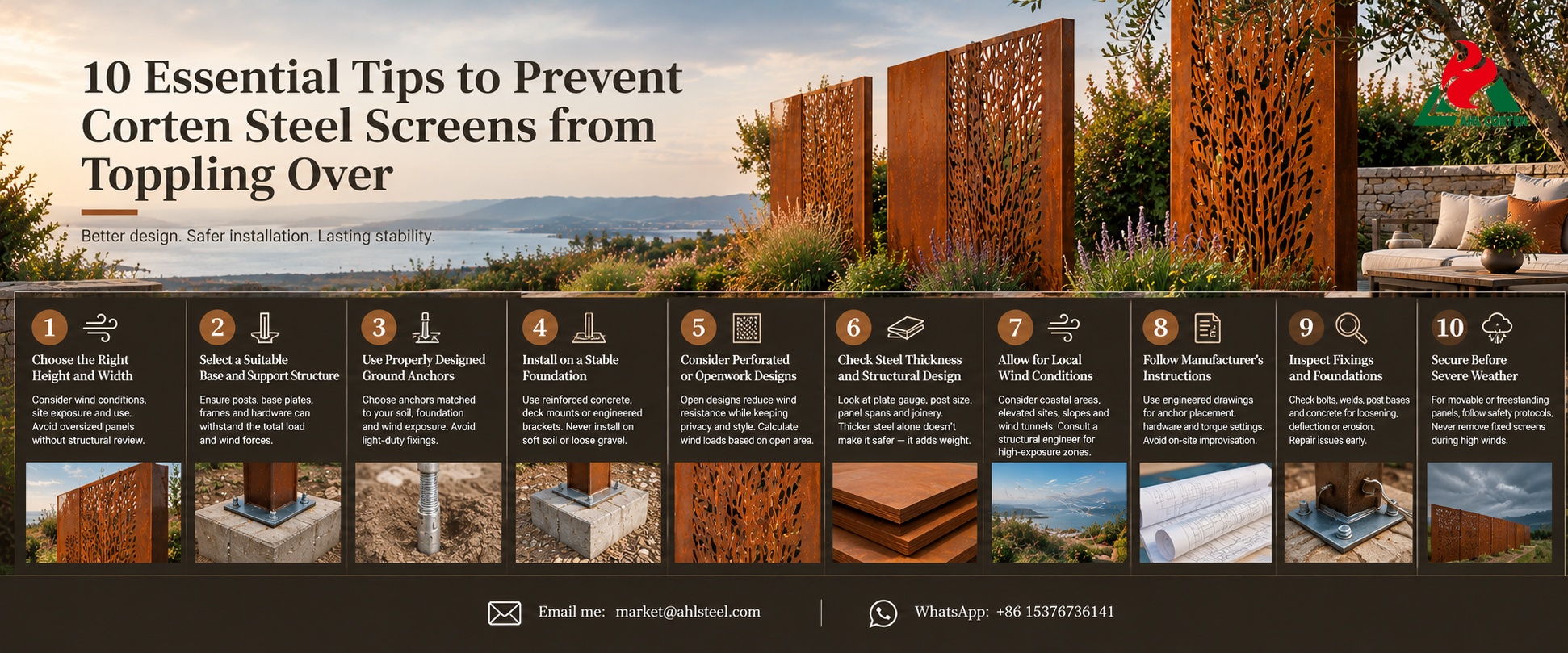
1. Choose the Right Screen Height and Width
Always select panel dimensions based on local wind conditions, site exposure, and intended use. Avoid installing oversized freestanding screens without preliminary structural evaluation. The taller and wider the solid panel, the larger the target it creates for the wind, dramatically increasing overturn risk.
2. Select a Suitable Base and Support Structure
A screen is only as strong as its framing system. Thoroughly evaluate the load-bearing capacity of post uprights, base plates, support frames, and hardware. Ensure every structural component—from hidden stiffeners to surface flanges—is matched to the total weight and wind load of the screen panels.
3. Use Properly Designed Ground Anchors
Select anchor systems tailored directly to your soil type, base foundation, and local wind exposure. Never rely on light-duty garden stakes, shallow pins, or basic masonry plugs to fix mid-to-large-scale Corten panels. High-load chemical anchors, heavy-duty sleeve bolts, or cast-in concrete j-bolts are essential for long-term stability.
4. Install Screens on a Stable Foundation
Prioritize a reinforced, engineered foundation over unstable ground. Depending on product design and site conditions, options include cast-in-place concrete footings, structural deck mounts, or engineered paving brackets. Installing heavy steel directly onto soft soil or loose gravel will inevitably lead to shifting and leaning over time.
5. Consider Perforated or Openwork Designs
Incorporating laser-cut patterns, lattice work, or open geometry naturally lowers wind resistance while preserving visual privacy and aesthetic appeal. Keep in mind that open designs still experience significant forces; net wind loads must always be calculated based on open-area percentage, hole shape, and overall framing resistance.
6. Check Steel Thickness and Structural Design
Look at structural stability holistically: consider plate gauge thickness, post cross-sections, panel spans, joinery methods, and overall system rigidity. Note: Using a thicker Corten plate alone does not automatically make the installation safer—it adds weight, which requires even stronger framing, post gauge, and foundation anchoring.
7. Allow for Local Wind Conditions
Account for localized microclimates that increase wind speeds, such as coastal frontlines, elevated rooftops, open courtyards, hillside slopes, and wind-tunnel gaps between buildings. When designing for high-exposure zones, consulting a structural engineer is highly recommended.
8. Follow the Manufacturer’s Installation Instructions
Strictly adhere to engineered shop drawings regarding anchor placement, hardware specifications, torque settings, and footing depths. Avoid improvising onsite attachment methods, skipping mounting points, or substituting recommended structural hardware with light-duty alternatives.
9. Inspect Fixings and Foundations Regularly
Perform seasonal structural audits on installed screens. Check bolts, weld seams, post bases, and concrete foundations for loosening, structural deflection, or unexpected sub-surface erosion. Promptly re-torque fasteners or repair base movement at the first sign of play.
10. Secure or Remove Screens Before Severe Weather
For modular, temporary, or freestanding screens designed for mobility, follow manufacturer safety protocols to fold, ballast, or temporarily relocate panels before severe storms. Never attempt to disassemble large fixed corten steel decorative panels during high winds, and never modify permanent installations without professional guidance.
Want the Latest Price Lists for Corten Steel Screens? Contact Us!
How to Choose Wind-Resistant Corten Steel Garden Screens
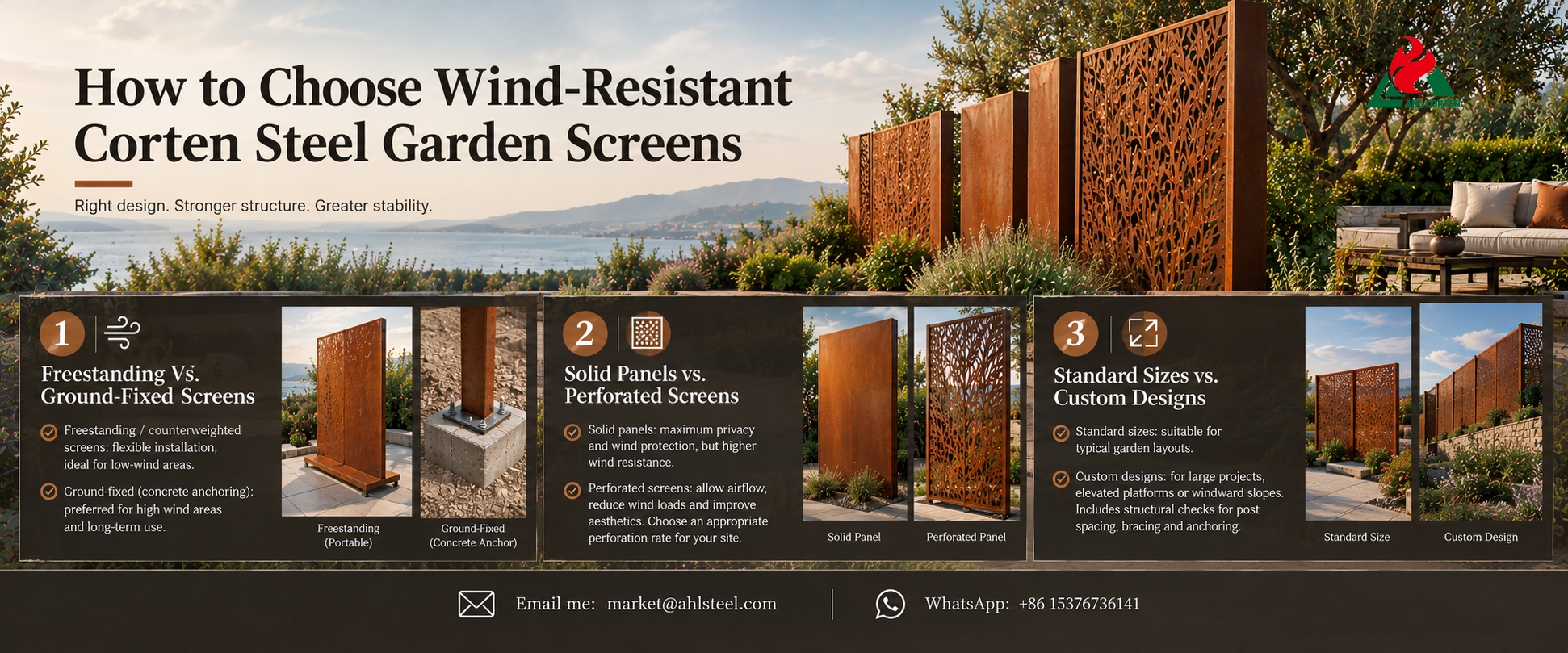
1. Freestanding vs. Ground-Fixed Screens:
Counterweighted, modular screens are suitable for low-wind areas such as patios, offering flexible installation without damaging the ground.
For projects with high wind-facing boundaries or long-term use, concrete foundation anchoring is the preferred option for greater stability.
2. Solid Panels vs. Perforated Screens
Solid screens offer strong privacy and effective wind protection but create higher wind resistance.
Perforated laser-cut screens allow airflow to pass through, reducing wind loads while enhancing the aesthetic appeal; when selecting a design, ensure the perforation rate is appropriate for the wind pressure.
3. Standard Sizes vs. Custom Designs
Standard sizes are suitable for typical garden layouts.
Projects involving large dimensions, elevated platforms, or windward slopes require customized structural designs, including verification of post spacing, internal bracing, and anchoring feasibility.
Before placing an order, be sure to request fabrication drawings to confirm panel thickness, dead weight, base style, fastener specifications, and recommended foundation depth to ensure compatibility with site conditions.
Want the Latest Price Lists for Rusted Steel Screens? Contact Us!
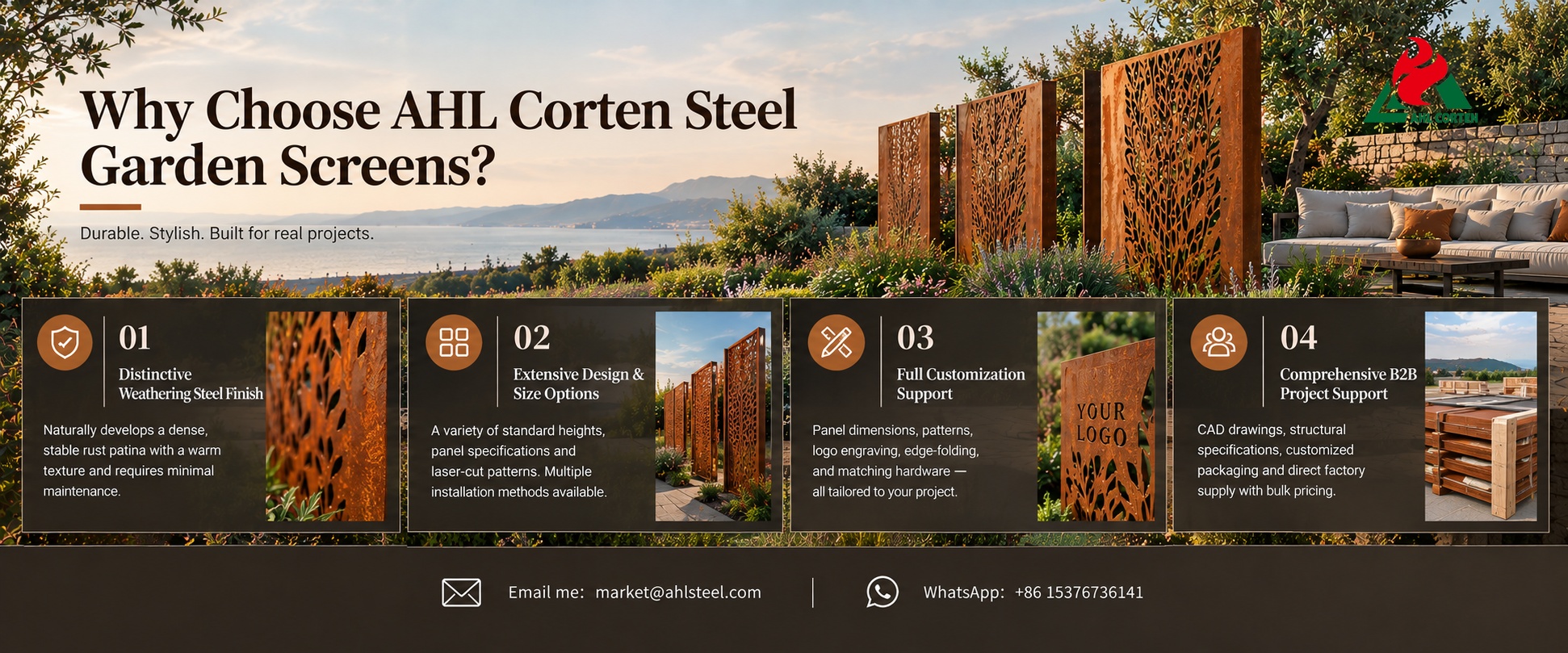
Why Choose AHL Corten Steel Garden Screens?
1. Distinctive Weathering Steel Finish
The screens naturally develop a dense, stable rust patina with a warm texture and require minimal maintenance, making them ideal for modern residences, gardens, and commercial landscapes.
2. Extensive Design & Size Options
Choose from a variety of standard heights, panel specifications, and laser-cut patterns. Supports multiple installation methods, including ground-embedded, base-plate surface mounting, and frame assembly.
3. Full Customization Support
Panel dimensions, perforation patterns, logo engraving, edge-folding techniques, and matching hardware can be customized on demand to meet on-site project requirements.
4. Comprehensive B2B Project Support
We serve landscape architects, general contractors, and distributors by providing CAD drawings, structural specifications, and customized packaging solutions, and support direct factory supply with bulk pricing.
Want the Latest Catalogs for Rusted Steel Screens? Contact Us!
FAQ
1. Can Corten Steel Garden Screens Withstand Strong Winds?
Weathering steel itself does not directly resist wind. The vast majority of damage occurs at connection points: rotation of the base plate, pull-out of anchor bolts, fastener fatigue, and overall overturning. It is the entire system that provides true wind resistance: the column cross-section, base plate, foundation, mounting method, and wind-exposed area. In open areas, calculations must be based on local wind pressure; one cannot rely solely on general marketing claims.
2. How Do You Secure a Freestanding Steel Garden Screen?
There are three mainstream solutions: using a base plate with chemical anchors on a concrete floor slab; using pre-embedded concrete foundations for columns in new landscape installations; and using a counterweight base when drilling is not permitted on rooftops or in leased spaces. Regardless of the solution, stainless steel fasteners must be used to prevent galvanic corrosion between dissimilar materials, the base must allow for drainage, and the anchors should be retightened three months after installation.
3. Are Perforated Metal Screens Better In Windy Areas?
They are generally more suitable. An aspect ratio of around 40% can significantly reduce wind thrust by balancing air pressure on both sides of the panel. Drawbacks include reduced privacy, decreased panel rigidity, and wind noise generated by the holes; perforated corten steel fence panels still require a reliable support frame.
4. Does Thicker Corten Steel Make a Garden Screen More Stable?
To a limited extent. Increased panel thickness enhances bending stiffness, but overall stability is determined by the posts, connection joints, and foundation. Thicker panels have greater dead weight, which amplifies the overturning moment on the base; consequently, the foundation and anchoring must be stronger. Thickness is primarily used to accommodate large spans, high wind pressures, and allow for rusting at cut edges.
5. What Type of Foundation Is Suitable for a Tall Garden Screen?
For heights up to 1.8 meters, single-post isolated foundations are commonly used, with a burial depth of approximately 600 mm, adjusted according to soil conditions. For taller structures or sites exposed to prevailing winds, foundation dimensions must be calculated based on the overturning moment; continuous corten steel fence panels with multiple panels are best suited for strip foundations. In areas with soft backfill soil, helical piles may be used; the base of the foundation must be below the frost line, and proper drainage must be ensured.
6. How Often Should Garden Screen Fasteners Be Inspected?
The first re-inspection should be conducted three months after installation, once soil settlement has stabilized; routine inspections should follow annually. Additional inspections should be conducted after storms. In coastal areas with salt fog, inspections are recommended every six months, as salt accelerates rusting and loosening of fasteners.
7. Can Corten Steel Screens Be Customized for Exposed Locations?
Yes, and this is the core value of customization. Common reinforcement methods include: using thicker posts, reducing post spacing, increasing the open area ratio, welding panels to posts, adding a galvanized inner support frame, and deepening the foundation. By providing the site location, screen height, span, and soil conditions, we can optimize the structural design prior to production.
Are You Ready to Choose an Outdoor Corten Steel Screen That’s Right for You?
A durable and safe outdoor metal privacy screen isn’t simply the one with the thickest steel plates—it’s a system comprising panels, columns, bases, and foundations, designed to withstand specified wind loads and maintained through annual inspections.
The design and perforation patterns determine its aesthetic appeal, while the foundation and anchoring ensure long-term safety.
If you are working on a project in a wind-exposed area, please send the site location, screen height, span, and soil conditions to AHL. We will review the structural design in advance and provide fabrication drawings and a customized quote.
Want the Latest Catalogs for Rusted Steel Screens? Contact Us!